
Student Research Symposium Program Portal
220 submissions
| # | SID | Presentation Modality | Poster Session/Number | Submission title | UUID | In draft | Starred | Locked | Notes | Created | Completed | Changed | User | IP address | Primary Student Contact First Name | Primary Student Contact Last Name | Pronouns | Primary Student Contact FSU Student Email | Photo of all individuals presenting this work | Major(s) of all individuals presenting this work | Bio of all individuals presenting this work | Poster Title | Abstract | Research Mentor Name | Research Mentor's College (or High School) | Research Mentor's Department (or Subject) | Research Mentor's Email | Additional Research Mentor(s) | Co-presenter(s) | Keywords | Work | Poster PDF or Powerpoint | Poster Thumbnail | I will be printing my poster | Year | Annual description | Update URL | Operations |
|---|---|---|---|---|---|---|---|---|---|---|---|---|---|---|---|---|---|---|---|---|---|---|---|---|---|---|---|---|---|---|---|---|---|---|---|---|---|---|
| 185 | 9033 | Asynchronous Online Presentation | https://drive.google.com/file/d/1jqCiLgJ7Wc-PaExrJJruL4QhX69ZGcP6/view?usp=drive_link | Student Research Symposium Program Portal: Submission #185 | fe9ec1e5-86c6-4f3f-9612-267583db0ae1 | No | Star/flag Student Research Symposium Program Portal: Submission #185 | Lock Student Research Symposium Program Portal: Submission #185 | Add notes to Student Research Symposium Program Portal: Submission #185 | Tue, 01/27/2026 - 01:40 PM | Tue, 01/27/2026 - 01:40 PM | Tue, 04/07/2026 - 12:22 PM | Anonymous | 96.27.64.86 | Caleb | Fanning | he/him | calebshenlaifanning@gmail.com |
|
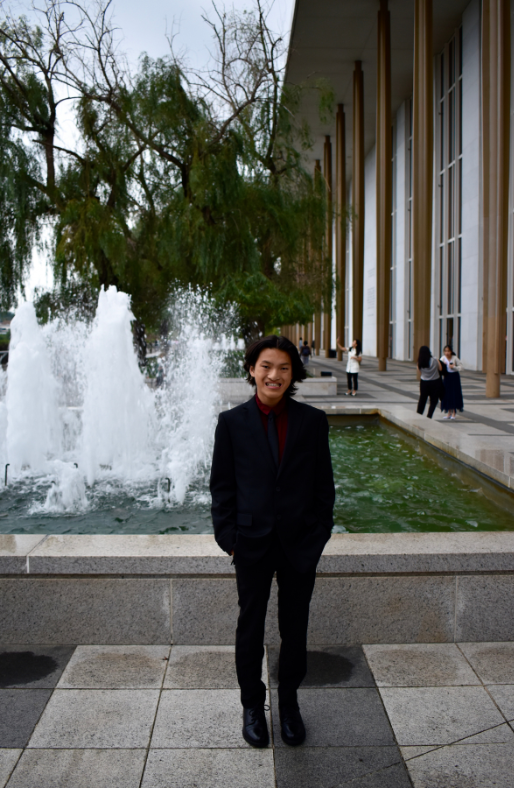
Neuroscience | My name is Caleb Fanning, and I am a researcher at North Bay Haven Charter Academy. I am in 11th grade and am currently studying to achieve my AP Capstone Diploma. I am interested in neuroscience and plan to study cognitive/computational neuroscience when I am in college. | The Effects of Music Tempo on Mathematical Performance | Recently, there has been an influx of research on how listening to music of varying tempos and students’ mathematical performance is correlated; however, there has been a lack of research on the variability of BPM within musical genres as it relates to performance. To bridge this gap, this study offers cogent insight into how listening to different tempos within a musical genre can lead to differences in mathematical competence. It was hypothesized that students who listened to slow classical music (Ravel) would achieve higher test scores. To experiment, it was conducted with over 100 high school students anonymously. The experiment required each participant to take a multiplication test while listening to background music, as well as a survey asking for their mathematical knowledge and preference for the music. The raw data were then analyzed, and conclusions were drawn based on each participant’s test scores, mathematical level, and preference for the music. The hypothesis was not supported, with the data displaying that students who listened to Ravel scored the lowest out of the four classical music groups. The experiment’s outcomes offer a myriad of applications. The data showed that students who listened to Stravinsky’s music scored the highest. Furthermore, the data displayed that Shostakovich and Mussorgsky, both considered with a high BPM, had a higher test score than Ravel. These findings provide insight into how specific tempos influence mathematical achievement, offering practical applications for optimizing educational environments. Nevertheless, extensive research beyond this experiment is needed to increase generalizability and eliminate limitations. | Robin Vaughn | North Bay Haven Charter Academy | English | vaughrl@bayhaven.org | neuroscience, mathematics, music | Complete | 2026 | 5th annual Undergraduate Research Symposium, April 17, 2025 | https://pc.fsu.edu/student-research/symposium/research-symposium-program-portal?element_parents=elements/student_photo&ajax_form=1&_wrapper_format=drupal_ajax&token=c4NlIXn-XK74gw29pd4w24vpufPdxUz8PRf1iHjXFu0 | ||||||
| 184 | 9032 | Face to Face Poster session | 10:00 Graduate and Undergraduate presentations | Student Research Symposium Program Portal: Submission #184 | 03f52509-1092-4e7f-b6c2-e77fe58e8598 | No | Star/flag Student Research Symposium Program Portal: Submission #184 | Lock Student Research Symposium Program Portal: Submission #184 | Add notes to Student Research Symposium Program Portal: Submission #184 | Mon, 01/26/2026 - 04:58 PM | Mon, 01/26/2026 - 05:01 PM | Fri, 04/10/2026 - 03:36 PM | Anonymous | 146.201.10.14 | Kaden Lemieux, Karlie Kolmetz, | Kaden Tharp, and Steve Spence | kjl23f@fsu.edu |

|
Civil Engineering | Kaden Lemieux - I am from Bonifay Florida. I attended Bethlehem High School, and received my AA at Chipola College before transferring to FSU PC to complete my Bachelor's degree in Civil Engineering Karlie Kolmetz - I am from Bonifay Florida. I attended Holmes County High School, and received my AA at Chipola College before transferring to FSU PC to complete my Bachelor's degree in Civil Engineering Kaden Tharp - I am from Chipley Florida. I attended Vernon High School, and received my AA at Chipola College before transferring to FSU PC to complete my Bachelor's degree in Civil Engineering Steve Spence - I am from Marianna Florida. I attended Marianna High School, and received my AA at Chipola College before transferring to the University of Florida and received a Bachelor's degree in Biology. I then transferred to FSU PC to complete my Bachelor's degree in Civil Engineering. |
Marianna Multi-Sport Complex | The Marianna Multi-Sport Complex is a proposed resilient community facility located at 3625 Caverns Road in Marianna, Florida. The project is designed to serve as both a daily-use recreational hub and a FEMA P-361–compliant emergency storm shelter for Jackson County. The development includes a central multi-sport building housing a regulation basketball court and hardened storm shelter, along with outdoor recreational amenities such as tennis courts, pickleball courts, a pavilion, expanded parking, and multi-use pedestrian paths. The site will be accessed from Caverns Road (S.R. 166) with improvements to FCI Road to enhance traffic flow, safety, and ADA accessibility. The existing site consists of undeveloped land with gentle topographic variation and favorable subsurface conditions for shallow foundations, supported by geotechnical investigation. Stormwater management will be handled through a centralized stormwater pond designed in accordance with NWFWMD and FDEP requirements, incorporating water quality treatment and potential irrigation reuse. Additional infrastructure improvements include a new sewer lift station, utility extensions, and pedestrian connectivity enhancements throughout the complex. The project emphasizes structural resilience, community safety, and sustainable site development while addressing lessons learned from Hurricane Michael, during which schools were used as emergency shelters. By providing a dedicated, code-compliant shelter, the Marianna Multi-Sport Complex improves emergency preparedness while supporting recreation, economic growth, and regional sports tourism. The conceptual design assumes a total project budget of approximately $25 million and establishes a foundation for future detailed design, permitting, and funding efforts. |
Dr. Korhan Adalier and Dr. Hafiz Ahmad P.E. | Florida State University Panama City | Civil Engineering | kadalier@pc.fsu.edu and hahmad@pc.fsu.edu | Brent Melvin P.E., David Melvin P.E., Brian Lemieux P.E., Grant Harris P.E., Scott Golden P.E., Leanna Bell E.I., Quaid VanHuss P.E., Russel Large P.E. | Marianna Multi-Sport Complex | Complete | Yes | 2026 | 5th annual Undergraduate Research Symposium, April 17, 2025 | https://pc.fsu.edu/student-research/symposium/research-symposium-program-portal?element_parents=elements/student_photo&ajax_form=1&_wrapper_format=drupal_ajax&token=nCTVINLCmEJXx21jpa_eFNEyxLHsF8KUGh-44Sn11pg | |||||
| 183 | 9031 | Face to Face Poster session | 10:00 Graduate and Undergraduate presentations | Student Research Symposium Program Portal: Submission #183 | f1bc70b3-7540-475f-8774-437ccda31cdb | No | Star/flag Student Research Symposium Program Portal: Submission #183 | Lock Student Research Symposium Program Portal: Submission #183 | Add notes to Student Research Symposium Program Portal: Submission #183 | Mon, 01/26/2026 - 02:35 PM | Mon, 01/26/2026 - 03:07 PM | Fri, 04/10/2026 - 03:36 PM | Anonymous | 2a04:4e41:3eec:bd49::396c:bd49 | Tara Shaw, Jacob Bryant, | and KayLeigh Pauly | she/her/hers | tas23b@fsu.edu |
|
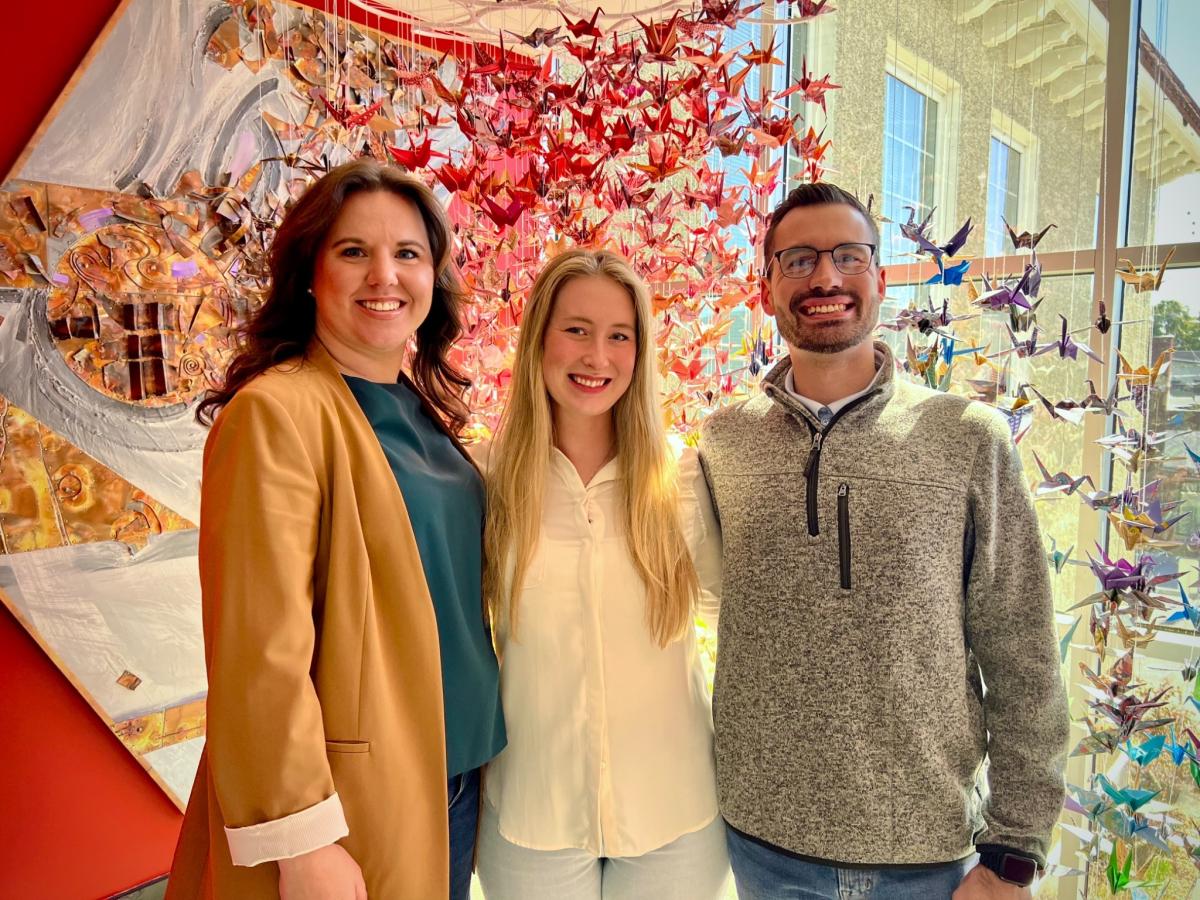
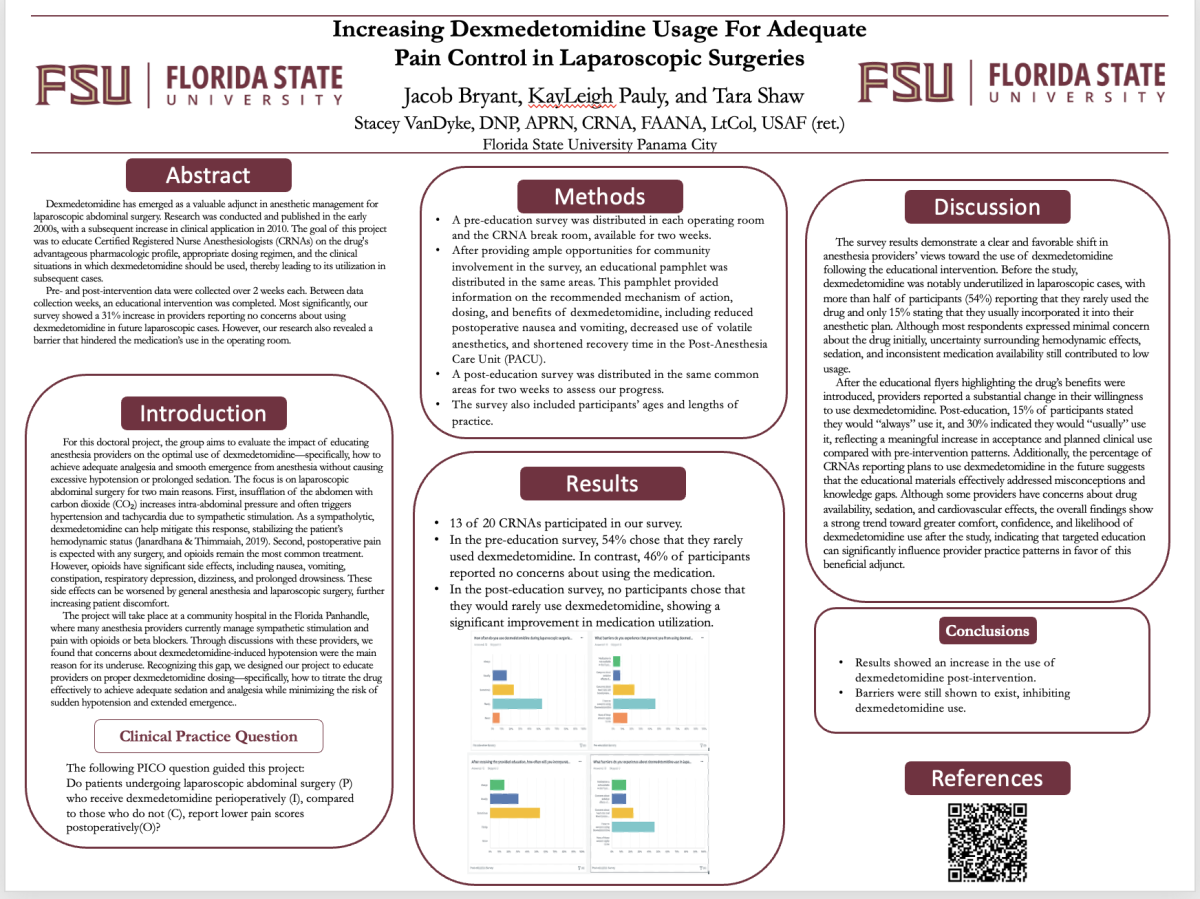
Doctorate of Nurse Anesthesia Practice | Jacob, KayLeigh, and Tara are Registered Nurses currently completing their Doctorate in Nurse Anesthesia Practice. Each shares deep roots in the Florida Panhandle, having been raised in Bay and Jackson Counties before pursuing nursing careers in different regions across the United States. Now reunited in Panama City to advance their education, they have returned to the communities that first inspired their call to serve. Training and providing care close to home has profoundly shaped their professional journeys and impacted them in ways that are difficult to put into words. | Increasing Dexmedetomidine Usage For Adequate Pain Control in Laparoscopic Surgeries | Dexmedetomidine has emerged as a valuable adjunct in anesthetic management for laparoscopic abdominal surgery. Research was conducted and published in the early 2000s, with a subsequent increase in clinical application in 2010. The goal of this project was to educate Certified Registered Nurse Anesthesiologists (CRNAs) on the drug's advantageous pharmacologic profile, appropriate dosing regimen, and the clinical situations in which dexmedetomidine should be used, thereby leading to its utilization in subsequent cases. Pre- and post-intervention data were collected over 2 weeks each. Between data collection weeks, an educational intervention was completed. Most significantly, our survey showed a 31% increase in providers reporting no concerns about using dexmedetomidine in future laparoscopic cases. However, our research also revealed a barrier that hindered the medication’s use in the operating room. |
Stacey VanDyke, DNP, APRN, CRNA, FAANA, LtCol, USAF (ret.) | Florida State University | Program Administrator for Nurse Anesthesia Practice Program | svandyke@pc.fsu.edu | Dexmedetomidine, Precedex, Surgery, Pain Control | Complete | Poster-PDF.pdf760.83 KB
|
|
No | 2026 | 5th annual Undergraduate Research Symposium, April 17, 2025 | https://pc.fsu.edu/student-research/symposium/research-symposium-program-portal?element_parents=elements/poster_thumbnail&ajax_form=1&_wrapper_format=drupal_ajax&token=u7qo4kZF6zD5USN79TcUUxGRoH9dEwGTL2oD1aBNnLc | |||
| 182 | 9030 | Synchronous Online Presentation | https://pc.fsu.edu/2026-synchronous-online-research-presentations | Student Research Symposium Program Portal: Submission #182 | 1842b0f3-74bc-406b-8bde-99590c9fcfc7 | No | Star/flag Student Research Symposium Program Portal: Submission #182 | Lock Student Research Symposium Program Portal: Submission #182 | Add notes to Student Research Symposium Program Portal: Submission #182 | Mon, 01/26/2026 - 02:33 PM | Mon, 01/26/2026 - 02:39 PM | Fri, 04/10/2026 - 03:37 PM | Anonymous | 2600:1700:b331:2280:fc00:1d9b:c443:a620 | Karine Atienza, | Ijeoma Anyanwu, and Jerry Jacob | She/Her | kla15c@fsu.edu |
|
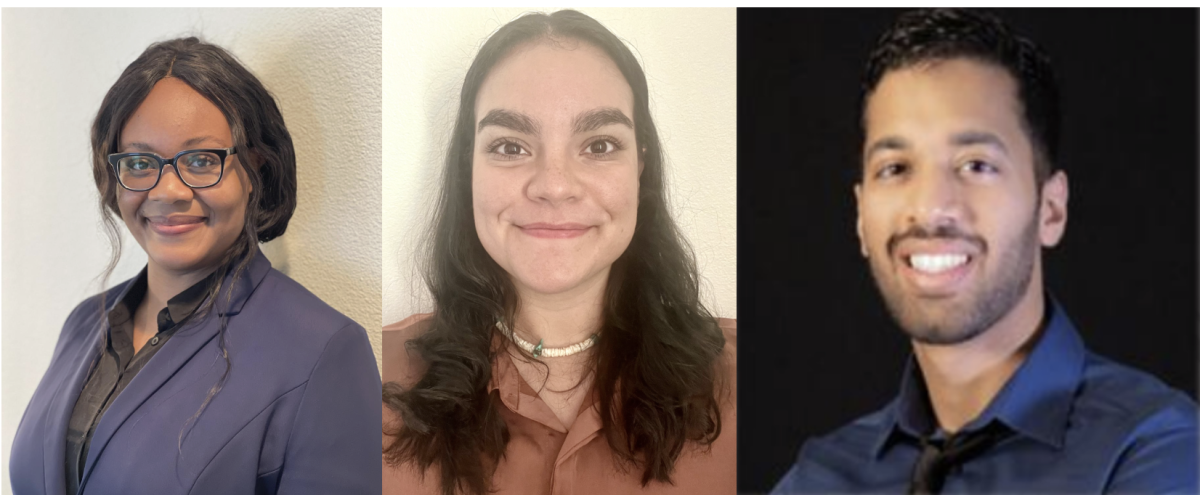
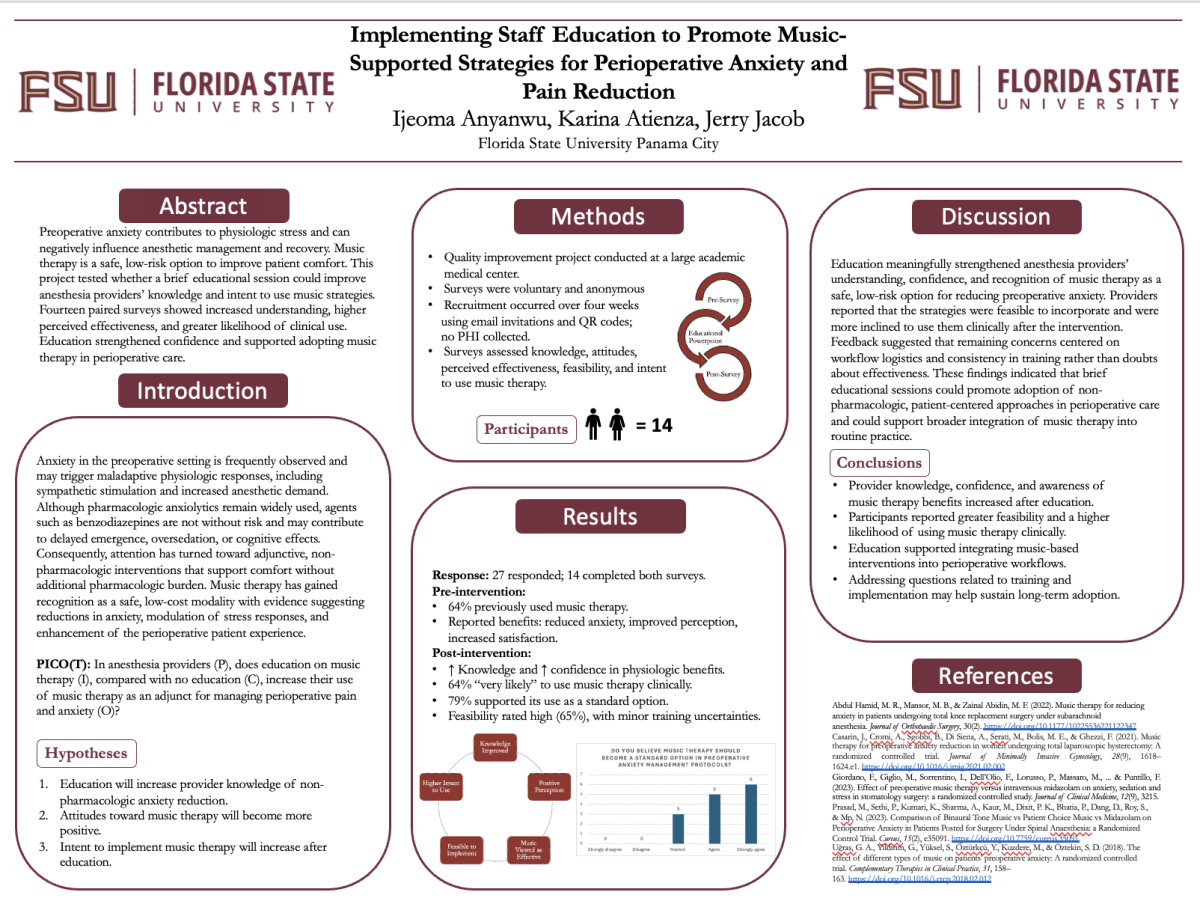
Doctorate of Nurse Anesthesia Practice | Ijeoma Anyanwu, Karina Atienza, and Jerry Jacob are Doctor of Nurse Anesthesia Practice students who have completed their clinical training in the South Florida area. Through their clinical experiences, they developed a strong interest in patient advocacy and improving their perioperative experience. Their research focuses on the use of music therapy to reduce preoperative pain and anxiety, inspired by a shared commitment to incorporating holistic, patient-centered approaches into anesthesia care. Outside of their academic and professional pursuits, Ijeoma enjoys spending quality time with her family and reading fiction novels. Karina enjoys exploring local coffee shops and outdoor walks. Jerry enjoys spending time with his family and his mini–Australian Shepherd, JoJo. | Implementing Staff Education to Promote Music-Supported Strategies for Perioperative Anxiety and Pain Reduction | Preoperative anxiety is common among surgical patients and is linked to hemodynamic instability, increased anesthetic needs, and delayed recovery. Although benzodiazepines are traditionally used to treat anxiety, their side effects highlight the importance of safe, non-pharmacologic options. Music therapy has been shown to effectively reduce perioperative anxiety, improve physiological stability, and increase patient satisfaction according to multiple randomized controlled trials. Despite this evidence, its adoption in anesthesia practice remains limited, often due to gaps in provider awareness and education. This quality improvement project assessed whether an educational intervention could enhance anesthesia providers’ knowledge, perceptions, and willingness to integrate music-supported strategies into perioperative care. Out of 50 invited individuals, 27 responded, and 14 completed both surveys. Pre-intervention results showed varied baseline familiarity with music therapy, although all participants recognized it as a safe, non-pharmacologic modality with measurable physiologic benefits. Post-intervention findings indicated improved knowledge, more positive perceptions of effectiveness, and a greater likelihood of applying music therapy in clinical settings. Participants also expressed strong confidence in its ability to reduce anxiety, improve patient satisfaction, and smoothly integrate into existing workflows. Overall, the educational intervention successfully reinforced evidence-based benefits, boosted provider confidence, and fostered positive attitudes toward implementing structured music therapy protocols in the perioperative setting. These findings support ongoing educational efforts to encourage wider adoption of non-pharmacologic anxiety-reduction strategies. |
Stacey A. VanDyke, DNP, APRN, FAANA, CRNA | Florida State University | Nurse Anesthesia Program | svandyke@fsu.edu | Scott Stewart, DNAP, CRNA | music therapy; preoperative; anxiety reduction strategies | Complete |
|
No | 2026 | 5th annual Undergraduate Research Symposium, April 17, 2025 | https://pc.fsu.edu/student-research/symposium/research-symposium-program-portal?element_parents=elements/student_photo&ajax_form=1&_wrapper_format=drupal_ajax&token=1FarRlyiGulWhXWqSBpWVhMsCOGHR7K2bXzFQWTjTLM | |||
| 181 | 9029 | Asynchronous Online Presentation | https://drive.google.com/file/d/1_4udnzalY1GOn-8R5ONmSuvDMewNPdWk/view?usp=sharing | Student Research Symposium Program Portal: Submission #181 | 94ad050f-4dcd-4d8b-bc0b-23efa75834ad | No | Star/flag Student Research Symposium Program Portal: Submission #181 | Lock Student Research Symposium Program Portal: Submission #181 | Add notes to Student Research Symposium Program Portal: Submission #181 | Sun, 01/25/2026 - 11:24 PM | Sun, 01/25/2026 - 11:35 PM | Fri, 04/10/2026 - 03:38 PM | Anonymous | 2601:601:d47f:400:1000:8d02:6f0b:eff1 | Chandler | Washington | She/Her | csw24b@fsu.edu |
|
Master of Science in Systems Engineering | I am originally from Charleston, South Carolina, and currently living in Seattle, Washington, working in the aerospace industry. My research interests focus on the intersection of electrical engineering, systems engineering, and computer science, particularly how emerging technologies can improve complex systems and decision-making. I am currently pursuing a Master of Science in Systems Engineering while planning to expand my knowledge in computer science to complement my electrical engineering background. My long-term professional aspirations include contributing to advanced aerospace or government projects, potentially involving defense or classified research. Beyond technical goals, I aim to achieve financial freedom, support my family, and maintain a low-stress, fully remote lifestyle. I approach my career with flexibility, learning and adapting to opportunities as they come, navigating challenges with curiosity, resilience, and a readiness to embrace whatever comes next. | Human Verification and Mission Success: Katherine Johnson in the Mercury Program | This research examines Katherine Johnson's mathematical contributions to NASA's Mercury missions, focusing on her role in ensuring dependable systems while managing teamwork between people and machines under high pressure. As computers evolved in the 1960s, manual calculation skills became increasingly advanced. Her impact on the progress of flight technology is explored here, highlighting the shifts she helped bring about in the aerospace industry. Where new software met skilled oversight, Johnson's approach combined machine speed with human precision, a combination that became essential for mission success. Katherine stepped in to figure out the path for Alan Shepard’s trip on Freedom 7, setting a new standard for accuracy in space travel math. Just before launch, John Glenn insisted only she could check the numbers generated by IBM for Friendship 7, so she did, by hand. she built fallback methods for steering spacecraft, adding an extra layer of safety. Through these acts, one after another, human missions gained stronger protection against error. Her work quietly held everything together when it mattered most. From old records at NASA’s Langley and papers by the Space Task Group, this work reveals how Johnson leaned on differential equations, applied Euler's approach, then sharpened results through repeated cycles. Her methods matched and even outdid early machines. Because she demanded rechecks, insisted on proof, standards took shape ones that now underpin aircraft and spacecraft reliability decades later. What stands out isn’t just what she solved, but where she did it. Breaking patterns became her way forward, not waiting for.... |
Dr. Daniel R. Georgiadis 'Dr. G' | Florida State university | Systems Engineering | dgeorgiadis@eng.famu.fsu.edu | Katherine Johnson | Exploratory (the research question has been identified and design of approach is outlined) | 2026 | 5th annual Undergraduate Research Symposium, April 17, 2025 | https://pc.fsu.edu/student-research/symposium/research-symposium-program-portal?element_parents=elements/student_photo&ajax_form=1&_wrapper_format=drupal_ajax&token=2ej0Wa0I336mrhmqaM7Q-NRYrhFgxjicnRMkOrkagAI | ||||||
| 180 | 9028 | Asynchronous Online Presentation | https://drive.google.com/file/d/1Z4HBQtlDat1ybz79ZnklRp8T0OutF64B/view?usp=sharing | Student Research Symposium Program Portal: Submission #180 | a39ea10d-1a72-4368-ba57-39fc4bb14afa | No | Star/flag Student Research Symposium Program Portal: Submission #180 | Lock Student Research Symposium Program Portal: Submission #180 | Add notes to Student Research Symposium Program Portal: Submission #180 | Sun, 01/25/2026 - 08:58 PM | Sun, 01/25/2026 - 09:06 PM | Fri, 04/10/2026 - 03:39 PM | Anonymous | 2600:8807:a299:6c00:c1d8:d5a1:6042:aec6 | Marissa | Heinsz | She/ Her | mkh25c@fsu.edu |

|
MS System Engineering | Marissa Heinsz is a graduate student in the Master of Science in Systems Engineering program at Florida State University. She holds a Bachelor of Science in Mechanical Engineering from Mercer University and currently works as a Mechanical Engineer at Robins Air Force Base in Warner Robins, Georgia. Marissa is interested in leadership because she hopes to inspire others to become the best versions of themselves to help them grow both professionally and personally. She plans to pursue leadership roles within engineering organizations while continuing to grow both technically and professionally. |
“Leadership Beyond the Launch Pad” – Ellen Ochoa | Ellen Ochoa’s career is a wonderful example of leadership in demanding, high-risk environments. As a NASA astronaut and the first Hispanic woman to serve as Director of NASA’s Johnson Space Center, Ochoa led teams where safety, accountability, and collaboration were necessary for success. She was able to adapt her leadership style to meet the needs of her teams while remaining focused on NASA’s broader mission. Her experiences and challenges helped her shape her leadership style into one that is grounded in preparation and inclusion. Ochoa’s story provides meaningful insights for students and professionals interested in leadership within engineering and aerospace organizations. | Dr. Daniel R. Georgiadis | Florida State University | Systems Engineering | dgeorgiadis@eng.famu.fsu.edu | Engineering Leadership, Aerospace, Ellen Ochoa | Complete | 2026 | 5th annual Undergraduate Research Symposium, April 17, 2025 | https://pc.fsu.edu/student-research/symposium/research-symposium-program-portal?element_parents=elements/student_photo&ajax_form=1&_wrapper_format=drupal_ajax&token=Z0uiZKBNXf5cL19hL1JLyx4re50Jk9FKhHSVaXVIlCw | ||||||
| 178 | 9026 | Asynchronous Online Presentation | https://drive.google.com/file/d/1pysBlxdYqDZnOm8J2DqbB5AqFl8bVjur/view?usp=sharing | Student Research Symposium Program Portal: Submission #178 | 187730a3-1c30-4804-87f5-ffe7559931f1 | No | Star/flag Student Research Symposium Program Portal: Submission #178 | Lock Student Research Symposium Program Portal: Submission #178 | Add notes to Student Research Symposium Program Portal: Submission #178 | Sun, 01/25/2026 - 08:19 PM | Sun, 01/25/2026 - 08:22 PM | Fri, 04/10/2026 - 03:40 PM | Anonymous | 2600:1701:407:ad80:9d78:38f7:af1a:a6ca | Luke | Landers | lal15b@fsu.edu |
|
Master of Science in Systems Engineering | Luke A. Landers is a graduate student in Systems Engineering at Florida State University, where he maintains a 4.0 GPA and is completing a Graduate Certificate in Systems Engineering Leadership. His academic interests center on model-based systems engineering, defense acquisition, decision analysis, and the integration of technical and organizational systems to support complex programs. Alongside his graduate studies, Luke works as an Operations Research Analyst with the U.S. Air Force Life Cycle Management Center at Eglin Air Force Base. His professional experience supports large-scale defense programs through analytical modeling, cost analysis, and decision support for senior leadership. Luke’s academic and professional work reflects a strong interest in applying systems thinking to real-world engineering and acquisition challenges, particularly within high-consequence, mission-critical environments. He is expected to complete his master’s degree in May 2026 and intends to continue advancing systems engineering practices within the Department of Defense. |
Benjamin Rich - The Invisable Man | Benjamin R. Rich was an American aerospace engineer and senior executive whose leadership played a defining role in shaping modern military aviation and systems engineering practice. Best known as the second director of Lockheed’s Advanced Development Projects division, commonly referred to as the Skunk Works, Rich assumed leadership during a period marked by organizational uncertainty, fiscal constraint, and evolving national security demands. This paper examines Rich’s leadership through the lens of contemporary leadership theory, with particular emphasis on traits, behaviors, and leader–follower relationships. Drawing upon concepts from The Leadership Experience, the analysis explores how Rich’s integrity, technical credibility, collaborative leadership style, and emphasis on trust enabled innovation within one of the most complex socio-technical environments of the Cold War. By applying behavioral and relational leadership frameworks, this paper demonstrates how Rich’s approach to leadership extended beyond engineering excellence to cultivate organizational resilience, sustained performance, and transformational technological outcomes. | Dr. Daniel R. Georgiadis 'Dr. G' | Florida State University | Systems Engineering | dgeorgiadis@eng.famu.fsu.edu | Leadership, Engineering, Benajamin Rich | Complete | 2026 | 5th annual Undergraduate Research Symposium, April 17, 2025 | https://pc.fsu.edu/student-research/symposium/research-symposium-program-portal?element_parents=elements/student_photo&ajax_form=1&_wrapper_format=drupal_ajax&token=JN3UWNwDeGDYXzQnxoPxChYDypCjWfsX6E-kUemeLgg | |||||||
| 179 | 9027 | Asynchronous Online Presentation | https://drive.google.com/file/d/1lrEMptqtC48SbBjkvlRm7mzS202G60tC/view?usp=sharing | Student Research Symposium Program Portal: Submission #179 | 3a733767-f96b-4915-8874-1e5dd85d5a1e | No | Star/flag Student Research Symposium Program Portal: Submission #179 | Lock Student Research Symposium Program Portal: Submission #179 | Add notes to Student Research Symposium Program Portal: Submission #179 | Sun, 01/25/2026 - 07:55 PM | Sun, 01/25/2026 - 08:33 PM | Fri, 04/10/2026 - 03:39 PM | Anonymous | 2607:3c40:1104:9b20:1533:7209:cc31:b030 | Gabrielle | Aziz | gabrielle.aziz@gmail.com |
|
MS Systems Engineering | Gabrielle Aziz is a career changer. She holds a doctorate degree and previously worked in the field of dietetics throughout the Florida Panhandle. She is currently an engineer. She has received a second bachelor’s in mechanical engineering and currently works at Eglin Air Force Base as a test support manager. In this role, she ensures warfighters have reliable test mission resources and support before, after, and in real time. As the primary point of contact for assigned efforts, she coordinates with key stakeholders to identify requirements, secure resources, and keep projects moving toward execution. She is currently pursuing a master’s degree in systems engineering. Her research interests focus on practical engineering problem-solving, project management, and data-informed decision support to improve operational performance in aerospace and defense environments. Long term, she aims to grow into an engineering leadership role that connects technical execution with team coordination and mission outcomes. Outside of work, she is married with children and enjoys spending time with family, attending comedy shows, and going on date nights with her husband. | Breaking Barriers and Leading Change: The Leadership of Ursula Burns at Xerox | This poster examines the leadership approach of Ursula Burns and how her decisions and behaviors shaped organizational performance during periods of strategic change. As the first Black woman to lead a Fortune 500 company as CEO of Xerox, Burns operated under high external pressure, complex stakeholder demands, and rapid shifts in technology and the marketplace. Using a leadership framework lens, this research analyzes how Burns managed expectations, communicated priorities, and balanced people-focused leadership with the need for execution and accountability. The study draws on publicly available speeches, interviews, and biographical and organizational sources to identify recurring leadership themes such as transparency, disciplined decision-making, resilience, and the role of pushback in improving decision quality. Findings suggest that Burns’ effectiveness was reinforced by consistent modeling of standards, clear performance expectations, and an emphasis on organizational learning during uncertainty. The analysis also highlights how her leadership narrative contributes to broader discussions of representation and barriers in executive leadership. This work offers practical insights for emerging leaders by comparing Burns’ leadership strategies into conceptual behaviors that support mission outcomes, team coordination, and responsible risk-taking. | Dr. Daniel Georgiadis | College of Engineering | IME | dgeorgiadis@eng.famu.fsu.edu | Ursula Burns, Xerox CEO leadership, Organizational change leadership, Corporate turnaround strategy, Women in executive leadership | Complete | 2026 | 5th annual Undergraduate Research Symposium, April 17, 2025 | https://pc.fsu.edu/student-research/symposium/research-symposium-program-portal?element_parents=elements/student_photo&ajax_form=1&_wrapper_format=drupal_ajax&token=KVqzvmC9egIvTZsoHhQf1zNBIeF4d_Ch2YCWUq0mQAQ | |||||||
| 177 | 9025 | Asynchronous Online Presentation | https://docs.google.com/presentation/d/1RY_0LVwSL9-QuU0Vsu2q1GZybSEoSOuE/edit?usp=sharing&ouid=113321034765453830786&rtpof=true&sd=true | Student Research Symposium Program Portal: Submission #177 | 507d2840-1416-4dd4-8b8a-440bcbaeace2 | No | Star/flag Student Research Symposium Program Portal: Submission #177 | Lock Student Research Symposium Program Portal: Submission #177 | Add notes to Student Research Symposium Program Portal: Submission #177 | Sun, 01/25/2026 - 06:11 PM | Sun, 01/25/2026 - 06:11 PM | Fri, 04/10/2026 - 03:40 PM | Anonymous | 2603:900b:b4f0:d360:fccd:241d:42bf:6083 | Jousling | Coffee | jnc24g@fsu.edu |
|
MS Systems Engineering | Jousling Coffee holds a degree in Industrial Engineering from the University of South Florida. She is currently pursuing her Master's degree in Systems Engineering at Florida State University. She aspires to develop into a strong and impactful leader in her future career. | Mary Barra- Breaking Barriers in the Automotive Industry | Mary Barra is a notable leader in the global automotive industry and the first woman to serve as CEO of one of the "Big Three" major automaker, General Motors. Her leadership is defined by a strong focus on safety, accountability, innovation, and people-centric decision making. Since becoming CEO, Barra has guided General Motors through major challenges that include safety crises and rapid technological change. Simultaneously positioning the company for the future through investments in electric vehicles and sustainability. The goal of this research is to explore Mrs. Barra’s leadership traits, behaviors, ethical leadership, and ability to balance business goals with organizational culture. | Dr. Daniel Georgiadis | FAMU-FSU College of Engineering | IME- Systems Engineering | dgeorgiadis@fsu.edu | leadership, automotive, Mary Barra, General Motors, people-centric | Complete | 2026 | 5th annual Undergraduate Research Symposium, April 17, 2025 | https://pc.fsu.edu/student-research/symposium/research-symposium-program-portal?element_parents=elements/student_photo&ajax_form=1&_wrapper_format=drupal_ajax&token=j4pmE9-LVSyddeQeIRsNNgtm8KB1IlZmJHykfwO8XTA | |||||||
| 176 | 9024 | Asynchronous Online Presentation | https://docs.google.com/presentation/d/1Ia1qbNZTdh01X5bP72fD1pIAGklzjQY0/edit?usp=sharing&ouid=113321034765453830786&rtpof=true&sd=true | Student Research Symposium Program Portal: Submission #176 | 7069a8ef-5ea1-473d-92ec-346f0d97e8e3 | No | Star/flag Student Research Symposium Program Portal: Submission #176 | Lock Student Research Symposium Program Portal: Submission #176 | Add notes to Student Research Symposium Program Portal: Submission #176 | Sun, 01/25/2026 - 04:23 PM | Sun, 01/25/2026 - 04:25 PM | Fri, 04/10/2026 - 03:41 PM | Anonymous | 2601:4c0:4180:4340:9d04:5eae:1421:19b4 | Astrid | Daugherty | she/her/hers | acd19e@fsu.edu |
|
Biomedical Engineering | Astrid Daugherty is a biomedical engineering master’s student at Florida State University, where she also earned her bachelor’s degree. Her research background spans tissue engineering, biomaterials, and complex systems modeling, with a focus on understanding how physical and structural cues influence cellular behavior in health and disease. She has conducted research at the National High Magnetic Field Laboratory, the High-Performance Materials Institute, Florida State University, and Mayo Clinic Florida in a variety of biomedical-related projects. Astrid’s work on ovarian cancer organoid models and archaeal-based hydrogels has been presented at multiple national conferences, earning awards including a first-place oral presentation at the Emerging Researchers National Conference in Washington D.C. In addition to research, she has served in leadership and mentorship roles through the Biomedical Engineering Society, UROP, and as a teaching assistant and tutor at FSU. Her long-term research interests center on integrating systems thinking with biomedical engineering to develop translational solutions for complex biological problems. |
Donella Meadows: Leadership Through Systems Thinking | Donella Meadows was a systems scientist and environmental thinker whose work reshaped how complex systems are understood. Meadows addressed a problem in decision-making: the tendency to treat complex systems as predictable and easily controlled. Her work demonstrated that failure across systems arises not from a lack of effort or expertise, but from misunderstanding system structure, feedback, and delay. Rather than focusing on isolated events or short-term outcomes, Meadows emphasized the importance of system dynamics: how interactions among components generate emergent behavior over time. This perspective positioned systems thinking not only as an analytical framework, but as a form of leadership capable of guiding action in conditions of uncertainty and long-term consequence. Representations of feedback dynamics and leverage points illustrate how leaders can shift system behavior by intervening at structural levels instead of reacting to surface-level outcomes. The analysis highlights both the strengths of Meadows’ framework, such as its broad applicability, as well as its limitations, including challenges in resistance to paradigm change. This work demonstrates that Meadows’ systems-based approach offers enduring insights for leadership in any context characterized by complexity and uncertainty. |
Dr. Daniel Georgiadis | Florida State University Panama City | Industrial and Manufacturing Engineering | dgeorgiadis@pc.fsu.edu | Systems Thinking; Leadership; Complex Systems; Leverage Points; Emergence | Complete | 2026 | 5th annual Undergraduate Research Symposium, April 17, 2025 | https://pc.fsu.edu/student-research/symposium/research-symposium-program-portal?element_parents=elements/poster_pdf&ajax_form=1&_wrapper_format=drupal_ajax&token=y7bGPYShyMspW6jt2TfZ9n5S7vmjzWtYMEGALT10n5M | ||||||
| 175 | 9023 | Asynchronous Online Presentation | https://drive.google.com/file/d/18PTnubwG3GQyQsYZdj1JxRlI5UotoDVd/view?usp=sharing | Student Research Symposium Program Portal: Submission #175 | 71b8e26a-67b1-434f-a5c5-ca32618d48a3 | No | Star/flag Student Research Symposium Program Portal: Submission #175 | Lock Student Research Symposium Program Portal: Submission #175 | Add notes to Student Research Symposium Program Portal: Submission #175 | Sun, 01/25/2026 - 03:11 PM | Sun, 01/25/2026 - 03:28 PM | Fri, 04/10/2026 - 03:42 PM | Anonymous | 2601:4c1:cb01:2d0:39ff:b039:4ff9:9194 | Canton | Young | cby18@fsu.edu |
|
MS Systems Engineering | Canton Young is a student in the MS Systems Engineering program at Florida State University, Panama City. He received a Bachelor of Science in Biomedical Science from the University of Central Florida in 2023. After Graduation, Canton worked as a researcher and laboratory technician at Applied Research Association's (ARA) Engineering Science Division, and began exploring a Master's in Systems Engineering in the fall of 2025. Canton Hopes to bring his knowledge and skill set as a Systems Engineer to ARA and to grow his career in research and development. | Theodore Roosevelt: The Bull Moose | Theodore Roosevelt was a visionary nature conservationist, military veteran, and public figure. He is best known as the 26th President of the United States of America and demonstrated a considerable number of qualities that made him a revered leader in history. This research will delve deeper into the leadership tactics and behavioral qualities that Theodore Roosevelt possessed through careful analysis of his actions and accomplishments throughout his life. Not all traits of Theodore Roosevelt could be considered positive, but an in-depth look into his childhood, career, and personal life will help demonstrate which of the techniques he utilized can and should be emulated by current and future leaders in the United States. | Dr. Daniel Georgiadis | College of Engineering | IME | dgeorgiadis@eng.famu.fsu.edu | Leadership, Roosevelt, President, Behavior, Traits | Complete | 2026 | 5th annual Undergraduate Research Symposium, April 17, 2025 | https://pc.fsu.edu/student-research/symposium/research-symposium-program-portal?element_parents=elements/student_photo&ajax_form=1&_wrapper_format=drupal_ajax&token=KPvBB7t652tMmUwdq-JLYDSW16iMNGrY16ZYQVCeiK8 | |||||||
| 174 | 9022 | Asynchronous Online Presentation | https://drive.google.com/file/d/19xSFSSeDM23X71kovnegRX6CcLIhpZmg/view?usp=sharing | Student Research Symposium Program Portal: Submission #174 | ee700474-72bd-4500-98d0-915a89aead18 | No | Star/flag Student Research Symposium Program Portal: Submission #174 | Lock Student Research Symposium Program Portal: Submission #174 | Add notes to Student Research Symposium Program Portal: Submission #174 | Sun, 01/25/2026 - 12:43 PM | Sun, 01/25/2026 - 12:59 PM | Fri, 04/10/2026 - 03:42 PM | Anonymous | 2601:4c1:c57e:1870:b884:2c3d:3e9a:8a9 | Corey | Adams | cea23b@fsu.edu |
|
MS Systems Engineering | After graduating from DHS, I joined the U.S. Marine Corps and was honorably discharged six years later. My path to the MS Systems Engineering Program is unique to say the least. After serving my country, I served my local community in federal law enforcement for approximately seven years. During this time, in 2012, I graduated from the University of South Alabama with a BA in Criminal Justice. In 2018, I made a significant career change and transitioned into the construction field. I knew construction and I had several family members in the field, including my stepfather, so I felt this was the right fit for me. From then on, I have built a successful career in government construction from MILCON, Amtrak, USACE, NAVFAC, USAF, VA, etc. It was during these years and understanding the Government structure, I became extremely interested in Systems Engineering. During this time, in 2021, I received my MBA from Boise State University with an emphasis in Construction Management. I just welcomed my first child into the world in November 2025, so most of my time is spent with him and my wife. | Winston Churchill - "The Lion of London" | Sir Winston Leonard Spencer Churchill (1874–1965) was a British statesman, military officer, historian, and writer who played a decisive role in shaping the political and moral landscape of the twentieth century. He is best known for his leadership of the United Kingdom during the Second World War and is widely regarded as one of the most influential leaders in modern history. Churchill served twice as Prime Minister of the United Kingdom, first from 1940 to 1945 and again from 1951 to 1955. His first term coincided with Britain’s darkest hours in World War II. Upon assuming office in May 1940, he led a nation facing the threat of invasion by Nazi Germany. Churchill’s refusal to negotiate with Adolf Hitler, combined with his ability to inspire public morale through powerful speeches, proved critical to sustaining British resistance during the Battle of Britain and the Blitz. Churchill died on January 24, 1965, at the age of 90. His legacy endures as a symbol of democratic resilience, strategic leadership, and the power of words during times of existential crisis. |
Dr. Daniel Georgiadis | Florida State University | Systems Engineering | dgeorgiadis@fsu.edu | Churchill, Leadership, London | Complete | 2026 | 5th annual Undergraduate Research Symposium, April 17, 2025 | https://pc.fsu.edu/student-research/symposium/research-symposium-program-portal?element_parents=elements/student_photo&ajax_form=1&_wrapper_format=drupal_ajax&token=K1ulQjtFG4q97sIowv0rgqW-vde2PTfAFtkUopB4pXY | |||||||
| 173 | 9021 | Synchronous Online Presentation | https://pc.fsu.edu/2026-synchronous-online-research-presentations | Student Research Symposium Program Portal: Submission #173 | 9c1b2575-a507-4b94-95b0-a5f4c5a91a6d | No | Star/flag Student Research Symposium Program Portal: Submission #173 | Lock Student Research Symposium Program Portal: Submission #173 | Add notes to Student Research Symposium Program Portal: Submission #173 | Sun, 01/25/2026 - 12:08 PM | Sun, 01/25/2026 - 12:08 PM | Fri, 04/10/2026 - 03:42 PM | Anonymous | 2601:3cb:a80:aa10:4101:77c7:5bbf:6f7a | Blake | Timothy, and Jamie Wilson | bt23e@fsu.edu |
|
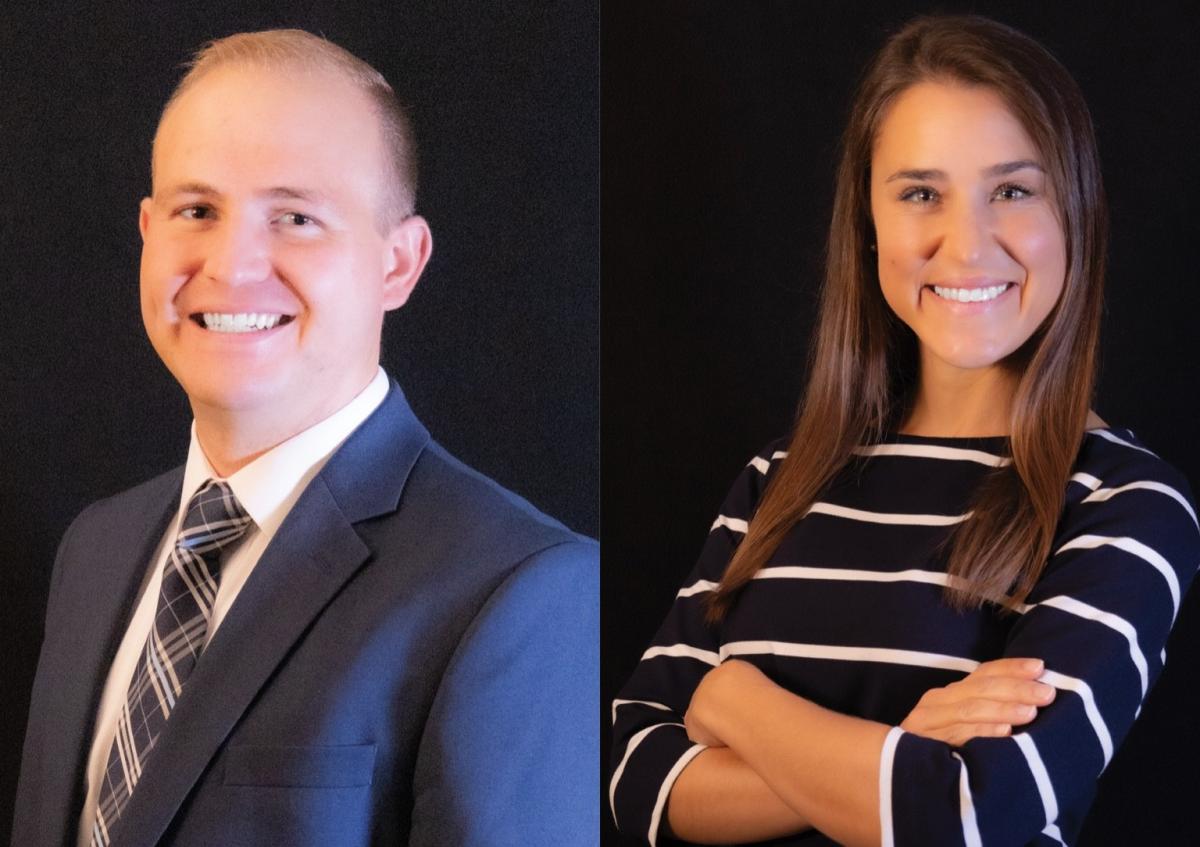
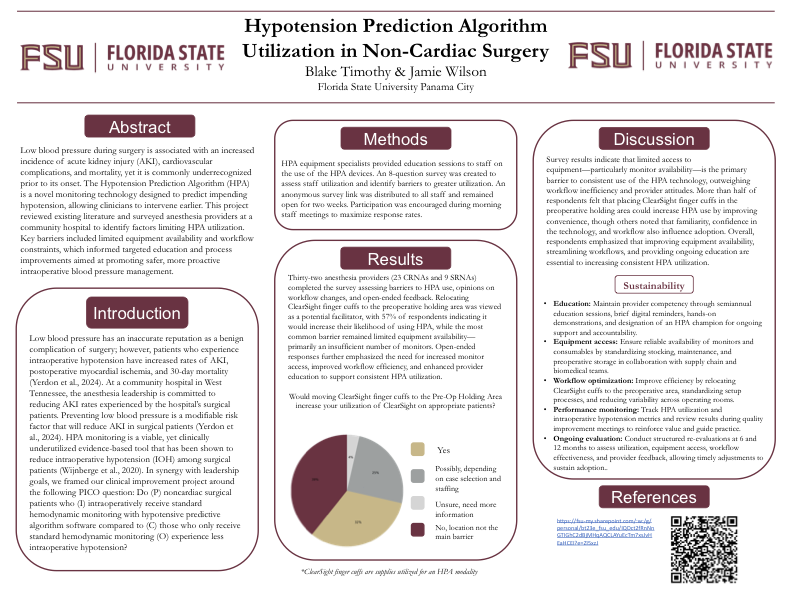
Doctor of Nurse Anesthesia Practice | Blake Timothy and Jamie Wilson are Doctor of Nursing Anesthesia Practice (DNAP) students at Florida State University in the College of Applied Studies, Department of Nurse Anesthesia. | Hypotension Prediction Algorithm Utilization in Non-Cardiac Surgery | Low blood pressure during surgery is associated with an increased incidence of acute kidney injury (AKI), cardiovascular complications, and mortality, yet it is commonly underrecognized prior to its onset. The Hypotension Prediction Algorithm (HPA) is a novel monitoring technology designed to predict impending hypotension, allowing clinicians to intervene earlier. This project reviewed existing literature and surveyed anesthesia providers at a community hospital to identify factors limiting HPA utilization. Key barriers included limited equipment availability and workflow constraints, which informed targeted education and process improvements aimed at promoting safer, more proactive intraoperative blood pressure management. | Lonnie Hodges, DNP, APRN, CRNA, CHSE, LtCol, USAF (ret.) | Florida State University | Nurse Anesthesia | lwhodges@fsu.edu | Gerard Hogan, DNSc., APRN-BC, CRNA, FAANA, LtCol, USAF (ret.) | Hypotension Prediction Algorithm, Hypotension Prediction Index, HPI, ClearSight, Advanced Noninvasive Hemodynamic Monitoring, Surgery, Anesthesia, Hypotension | Complete | HPA Utilization Symposium Poster.pdf871.61 KB
|
|
No | 2026 | 5th annual Undergraduate Research Symposium, April 17, 2025 | https://pc.fsu.edu/student-research/symposium/research-symposium-program-portal?token=H8rvzCLUymt00EYq0tPhqiXsbBWzrjAmdEazG94z1i8 | |||
| 172 | 9020 | Asynchronous Online Presentation | https://docs.google.com/presentation/d/1fP-zoRFu4qnsbzEbZZe_aD89-u3HdZRv/edit?usp=sharing&ouid=113321034765453830786&rtpof=true&sd=true | Student Research Symposium Program Portal: Submission #172 | 75400196-d1b4-4d6c-b182-cd34e8bc8492 | No | Star/flag Student Research Symposium Program Portal: Submission #172 | Lock Student Research Symposium Program Portal: Submission #172 | Add notes to Student Research Symposium Program Portal: Submission #172 | Sat, 01/24/2026 - 11:15 PM | Sat, 01/24/2026 - 11:25 PM | Fri, 04/10/2026 - 03:43 PM | Anonymous | 2600:1700:1ec2:1ce0:d4d4:96e:a87d:90cb | Jeffrey | Rios | jmr24l@fsu.edu |
|
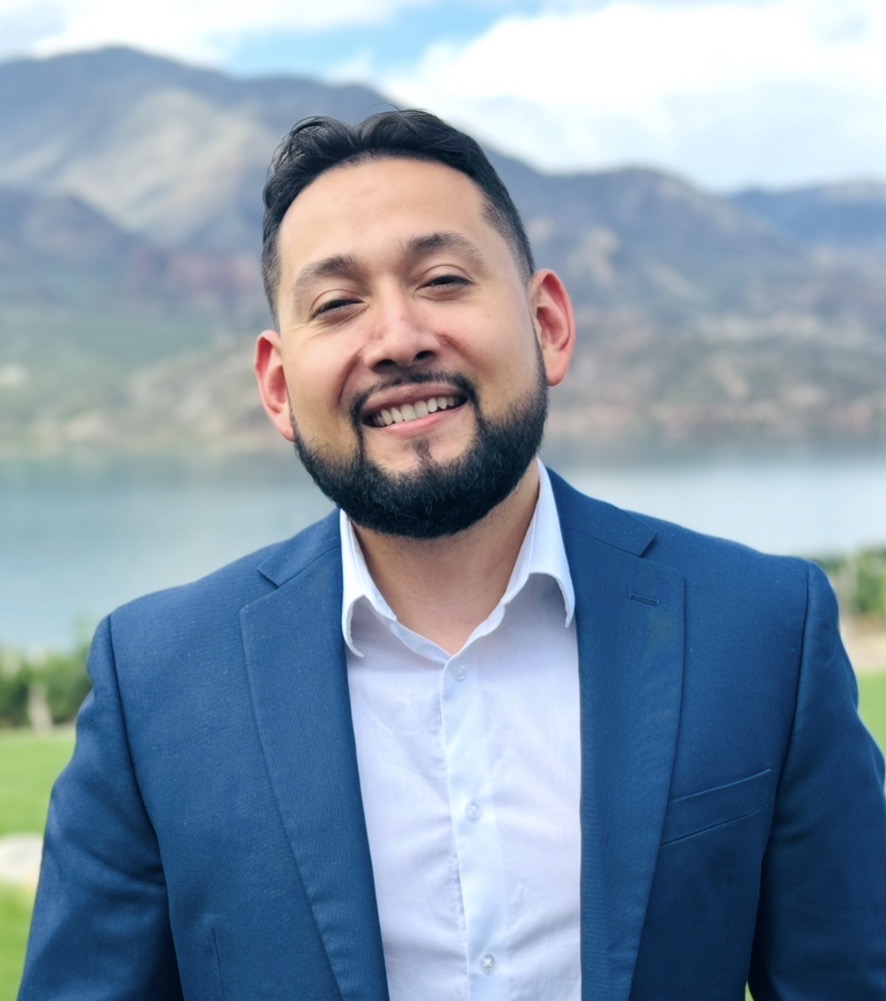
Master in System Engineering | I am a young systems engineer seeking to make a meaningful impact in the healthcare software industry. As many existing systems are outdated, my goal is to be one of the leaders of this generation who helps drive the modernization and evolution of the industry. | The Iron Chancellor | Otto von Bismarck, often known as the “Iron Chancellor,” emerged as one of the most influential political figures of the nineteenth century. Rising to the position of Chancellor of Prussia, he played a decisive role in the unification of Germany and the reshaping of the European balance of power. Through a calculated combination of warfare, diplomacy, and strategic political maneuvering, Bismarck transformed a fragmented collection of independent German states into a unified nation that quickly emerged as a dominant continental power. This paper examines the leadership qualities and decision-making approaches that characterized Bismarck’s tenure as Chancellor of Prussia and later as Chancellor of the German Empire. In addition, it explores his personal and political evolution, tracing his development from an unpromising and unconventional youth to one of the most consequential statesmen of the nineteenth century, and assesses how his leadership style contributed to both Germany’s rise and its long-term political trajectory. | Dr. Daniel R. Georgiadis | Florida State University | Industrial & Manufacturing Engineering | dgeorgiadis@eng.famu.fsu.edu | Otto von Bismarck | Exploratory (the research question has been identified and design of approach is outlined) | 2026 | 5th annual Undergraduate Research Symposium, April 17, 2025 | https://pc.fsu.edu/student-research/symposium/research-symposium-program-portal?element_parents=elements/student_photo&ajax_form=1&_wrapper_format=drupal_ajax&token=nVGRKS2B1bFGN5LiJ-6i5Fl7cg0KUaGpJqI2pSbuLEw | |||||||
| 171 | 9019 | Asynchronous Online Presentation | https://drive.google.com/file/d/1A-zan6H7qmuvrluQIsiTBhv04C-ryLM9/view?usp=sharing | Student Research Symposium Program Portal: Submission #171 | 73ba8f5c-7728-4041-a880-bf4c82b6e33f | No | Star/flag Student Research Symposium Program Portal: Submission #171 | Lock Student Research Symposium Program Portal: Submission #171 | Add notes to Student Research Symposium Program Portal: Submission #171 | Sat, 01/24/2026 - 08:53 PM | Sat, 01/24/2026 - 09:04 PM | Fri, 04/10/2026 - 03:44 PM | Anonymous | 12.176.99.131 | Tyson | Bonner | tb25@fsu.edu |
|
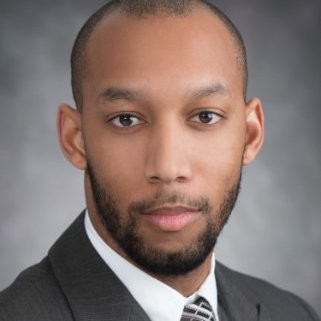
MS in Systems Engineering | Tyson Bonner is an Active Duty (Army Officer) service member, in search of an MS in Systems Engineering. He obtained a BS from Mississippi State University. | Leadership in Social Justice | From 1940 to 2020, John Lewis stood out during the U.S. civil rights struggle, guiding others through strong beliefs and peaceful resistance. What helped? A firm hold on non-violence as leverage for change, shaped by spiritual conviction and respect for everyone. From crowded rallies to quiet meetings, his presence stirred action across different circles - young organizers, religious figures, even lawmakers. Because of him, landmark bills like the Voting Rights Act became reality in 1965; later, his voice still echoed for those left behind beyond that decade. We look closely at how he led, revealing layers of struggle and change, showing why such moments linger in memory. | Daniel R. Georgiadis, Ph.D | Florida State University | Systems Engineering | dgeorgiadis@eng.famu.fsu.edu | John Lewis | Exploratory (the research question has been identified and design of approach is outlined) | 2026 | 5th annual Undergraduate Research Symposium, April 17, 2025 | https://pc.fsu.edu/student-research/symposium/research-symposium-program-portal?element_parents=elements/student_photo&ajax_form=1&_wrapper_format=drupal_ajax&token=VMX0GxRhFZjCXpYZSdkpefUjJamoLO9Ssd0TTgC_qGw | |||||||
| 169 | 9017 | Asynchronous Online Presentation | https://drive.google.com/file/d/1NSwWL_8ZRwupSbXhqscIDIaN6_jL1ueh/view?usp=sharing | Student Research Symposium Program Portal: Submission #169 | 19984c89-263c-4d70-b49f-2152c5fa3437 | No | Star/flag Student Research Symposium Program Portal: Submission #169 | Lock Student Research Symposium Program Portal: Submission #169 | Add notes to Student Research Symposium Program Portal: Submission #169 | Sat, 01/24/2026 - 01:59 PM | Sat, 01/24/2026 - 02:48 PM | Fri, 04/10/2026 - 03:44 PM | Anonymous | 2600:1700:160d:4c10:8cc:22d5:b7d4:2b42 | Raymond | Seth III | rgs25@fsu.edu |
|
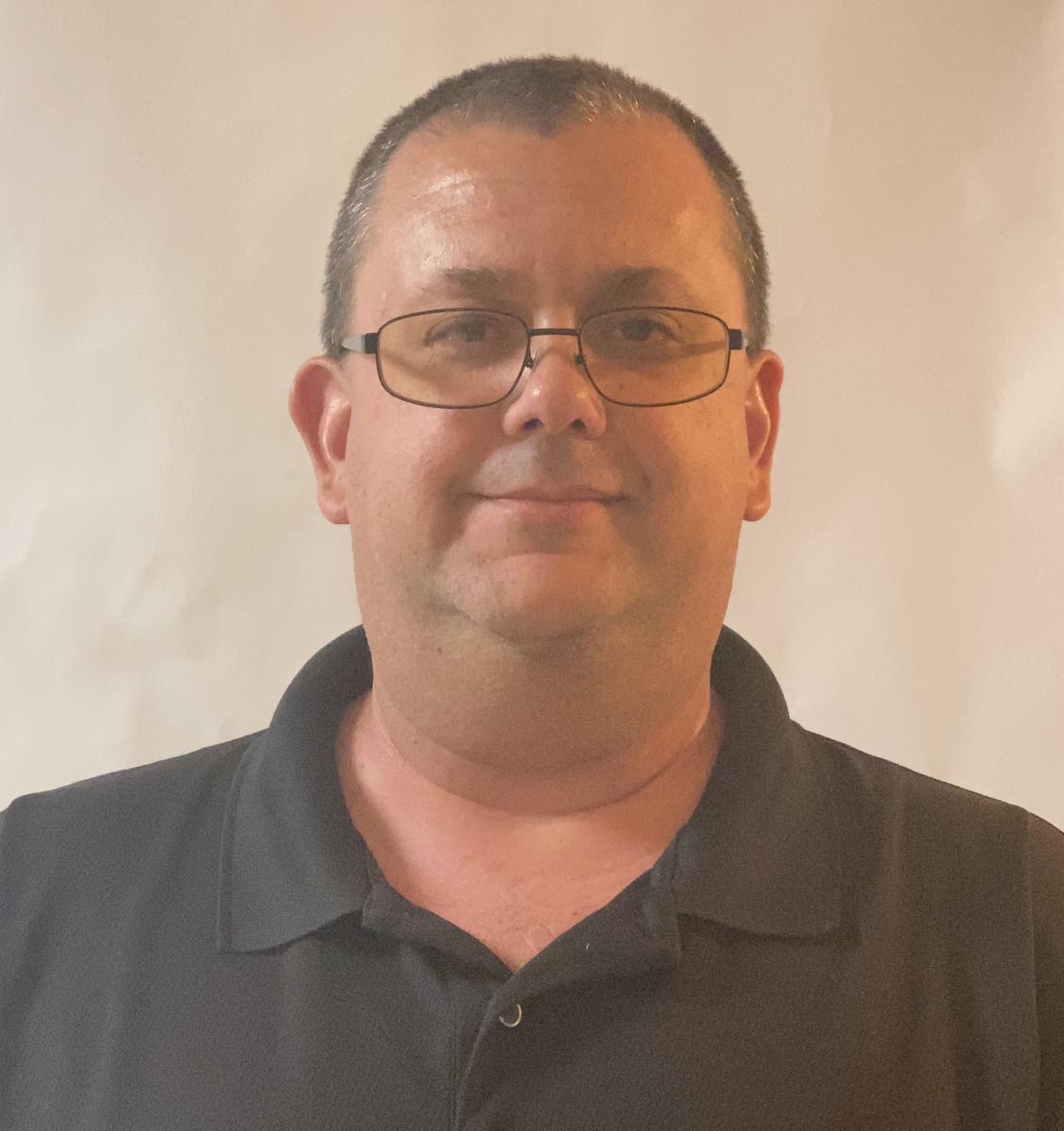
MS Systems Engineering | With over 23 years in technology, including 7 years in software engineering and network administration, and 16 years as a GIS analyst (recently promoted to Senior Database Analyst) for Florida's Department of Military Affairs, I've mastered integrating complex systems to solve real-world problems. At Camp Blanding Joint Training Center, managing 73,000 acres, I overhauled outdated GIS data processes, trained teams for self-sufficiency, boosted accuracy and productivity, and now lead a cutting-edge drone program to support wildfire management. A University of North Florida Computer Science grad with a lifelong passion for how things work, from childhood tinkering to AI robotics and custom circuit design, I'm pursuing Florida State University's master’s in systems engineering to unify my technical skills with interdisciplinary leadership for space industry ambitions. Balancing single parenthood of two Eagle Scout sons with 19 years of distinguished Boy Scouts volunteering (Silver Beaver Award recipient), I've led trainings for 2,000+ adults and youth, organized 800-person program events, and improved management skills amid personal adversity. This foundation equips me to tackle large-scale challenges and contribute innovatively at FSU and beyond. |
The Hero of Mafeking to the Creator of Scouting: Exploring Robert Baden-Powell’s Leadership Qualities | Robert Baden-Powell’s life tells a story about leadership, courage, imagination, and his motivations to serve others. This can be seen in his military career, as well as his role in the Siege of Mafeking, and in the creation of the worldwide Scouting movement. This study looks at his leadership through several models to see how his personality, choices, and experiences shaped the impact he had on both soldiers and youth. It will demonstrate how his time in the army shaped his focus on discipline, self-reliance, and community service, and later how he applied these qualities to methods for educating and developing youth in Scouting. Considering his achievements, character, and legacy, this paper will show some insights for today’s leaders who are trying to balance character traits like empathy, creativity, and vision with firmness, empathy, and commitment to serving others. | Dr. Georgiadis | Panama City Campus Master of Science Systems Engineering Program | Industrial & Manufacturing Engineering (IME) Department, MSSE Program Coordinator | dgeorgiadis@eng.famu.fsu.edu | Leadership, Robert Baden-Powell, Theory, Research, Scouting | Complete | 2026 | 5th annual Undergraduate Research Symposium, April 17, 2025 | https://pc.fsu.edu/student-research/symposium/research-symposium-program-portal?element_parents=elements/student_photo&ajax_form=1&_wrapper_format=drupal_ajax&token=P1v9aPc3b7UqhgWopcdTjbruSsIBuR0nsAINmonahGQ | |||||||
| 168 | 9016 | Face to Face Poster session | 10:00 Graduate and Undergraduate presentations | Student Research Symposium Program Portal: Submission #168 | 9572fd5b-0165-41ca-bb04-1f27dde38bcf | No | Star/flag Student Research Symposium Program Portal: Submission #168 | Lock Student Research Symposium Program Portal: Submission #168 | Add notes to Student Research Symposium Program Portal: Submission #168 | Sat, 01/24/2026 - 11:36 AM | Sat, 01/24/2026 - 12:06 PM | Fri, 04/03/2026 - 01:20 PM | Anonymous | 2600:1700:91c0:3d80:598b:173b:8c67:6b60 | Deina | Escribano | de24c@fsu.edu |
|
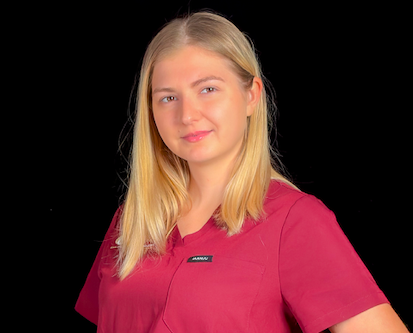
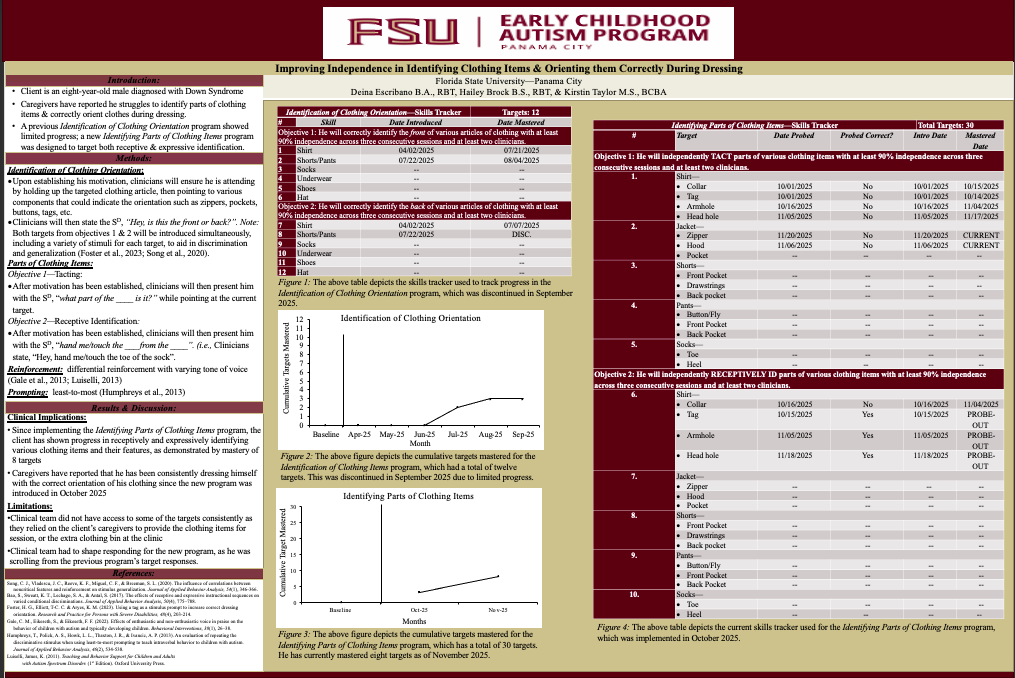
Psychology--Applied Behavior Analysis | Deina Escribano is a graduate student in the M.S. program in Applied Behavior Analysis at Florida State University's Panama City campus, where she will graduate in May 2026. She earned her Bachelor of Arts degree as well as minors in Criminal Justice as well as Religious Studies from the University of Washington in 2024. Currently, she works with the Early Childhood Autism Program as a Registered Behavior Technician and training case manager. Her research and clinical interests focus on stimulus control, skill acquisition, and the development of functional life skills that promote independence and meaningful outcomes for individuals with developmental disabilities. Deina has presented multiple research posters at university and professional events, where she has received recognition for applied clinical research. She is committed to evidence-based practice and professional growth, particularly as it relates to the fields of behavior analysis and medicine . Following graduation, she plans to pursue her BCBA licensure while continuing to integrate high-quality clinical practice with applied research dissemination during her pursuit of an acceptance into medical school. | Improving Independence in Identifying Clothing Items & Orienting them Correctly During Dressing | Dressing independence is a critical daily living skill that supports autonomy and quality of life for individuals with developmental disabilities. The present poster describes a clinical intervention designed to improve clothing orientation and identify various parts of clothing items for an 8-year-old male diagnosed with Down syndrome who demonstrated persistent difficulties with dressing independently. A previously implemented clothing orientation program yielded limited progress, prompting the development of a revised program targeting both receptive and expressive identification of clothing components (i.e., tags, pockets, zippers, sleeve, etc.) to strengthen stimulus control and promote generalization. Instruction was delivered within a naturalistic-contrived teaching framework and incorporated the use of least-to-most prompting as well as differential reinforcement strategies to aid in discrimination of correct versus incorrect responding. Multiple targets were introduced concurrently to support discrimination across varied stimuli too. Progress was tracked using a detailed skills tracker documenting target mastery across sessions. Following implementation of the revised program, the client demonstrated measurable improvements by mastering eight targets and showing consistent accuracy in orienting his clothing correctly during dressing routines. Caregiver reports have confirmed that these clinically observed gains have generalized to the home environment. Limitations included inconsistent access to specific clothing items and the need to shape responding due to prior learning history. Findings highlight the importance of precise target selection and clear stimulus control when teaching foundational life skills. This project demonstrates how integrating receptive and expressive identification within dressing can improve functional outcomes. | Kirstin Taylor | Florida State University | Psychology--Applied Behavior Analysis | kb23o@fsu.edu | Dressing Independence; Receptive/Expressive Identification; Skill Acquisition; Developmental Disabilities | Complete |
|
Yes | 2026 | 5th annual Undergraduate Research Symposium, April 17, 2025 | https://pc.fsu.edu/student-research/symposium/research-symposium-program-portal?element_parents=elements/student_photo&ajax_form=1&_wrapper_format=drupal_ajax&token=8uCs5BNJLE4SRkYPLg13ig1ZocDzqvlYzY2qPgXYluw | |||||
| 167 | 9015 | Synchronous Online Presentation | https://pc.fsu.edu/2026-synchronous-online-research-presentations | Student Research Symposium Program Portal: Submission #167 | 9192cbc4-85b7-41e9-8eda-ece33a60384b | No | Star/flag Student Research Symposium Program Portal: Submission #167 | Lock Student Research Symposium Program Portal: Submission #167 | Add notes to Student Research Symposium Program Portal: Submission #167 | Sat, 01/24/2026 - 08:44 AM | Sat, 01/24/2026 - 09:12 AM | Fri, 04/10/2026 - 03:45 PM | Anonymous | 2603:9001:2f0:9990:e508:8cd8:6363:851a | Kristin | Sneed, and Minna Nguyen | kls23a@fsu.edu |
|
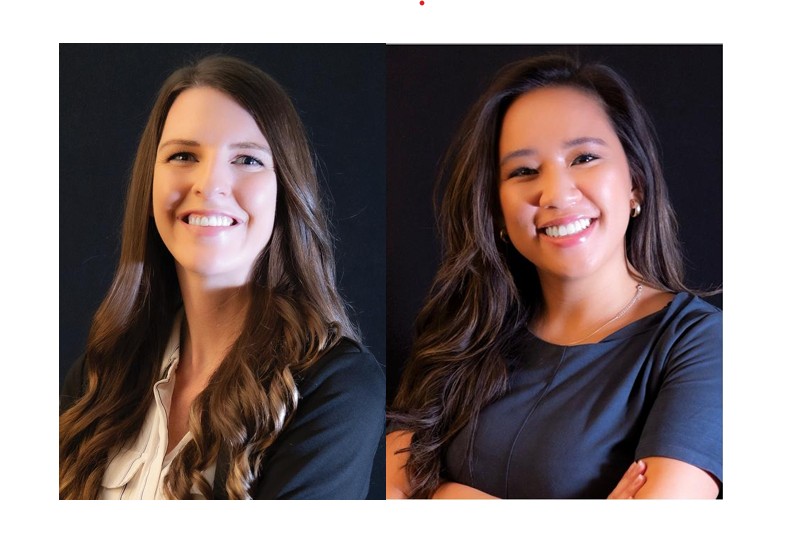
Doctor of Nurse Anesthesia Practice | Kristin is a Doctor of Nurse Anesthesia Practice (DNAP) student currently completing her degree and preparing to enter practice as a Certified Registered Nurse Anesthetist (CRNA). Her capstone project focused on double gloving during airway management and its impact on reducing contamination of the anesthesia machine during intubation. Her academic and clinical interests center on patient safety, infection prevention, and evidence-based practices that improve perioperative outcomes. Minna Nguyen is a Doctor of Nurse Anesthesia Practice student who will complete her degree in Spring 2026. She is originally from Morgan Hill, California, and has seven years of nursing experience. Her professional interests include providing evidence-based anesthesia care, pursuing leadership roles within the profession, and contributing to nurse anesthesia education as a future educator. |
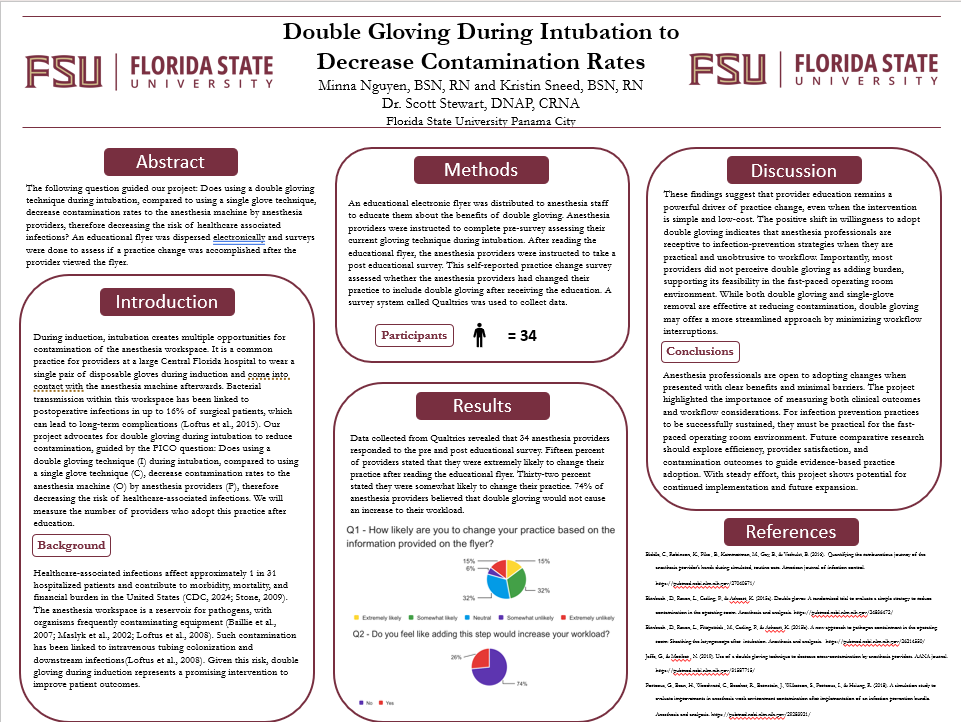
Double Gloving During Intubation to Decrease Contamination Rates | The purpose of this Doctor of Nurse Anesthesia Practice (DNAP) project was to implement a practice change that resulted in more providers double gloving during intubation to decrease the contamination rates to the surrounding anesthesia workstation. The following PICO question guided our development of this project: Does using a double gloving technique (I) during intubation, compared to using a single glove technique (C), decrease contamination rates to the anesthesia machine (O) by anesthesia providers (P), therefore decreasing the risk of healthcare associated infections? Education was dispersed electronically in a large hospital system in central Orlando and surveys were done to assess if a practice change was accomplished after the provider viewed the educational flyer. A survey system called Qualtrics was used to collect survey data. Results showed that some providers already used this technique, some providers used a single glove technique and removed the gloves after intubation, and some kept the same gloves on after intubation. After the education was provided thirty-two percent of the anesthesia providers stated they were somewhat likely to change their current practice and fifteen percent stated they were extremely likely to change their practice. | Scott Stewart, DNAP, CRNA | Florida State University | Nurse Anesthesia | sstewart3l@pc.fsu.edu | double gloving, intubation, anesthesia workstation contamination, infection prevention, healthcare-associated infections | Complete |
|
No | 2026 | 5th annual Undergraduate Research Symposium, April 17, 2025 | https://pc.fsu.edu/student-research/symposium/research-symposium-program-portal?element_parents=elements/student_photo&ajax_form=1&_wrapper_format=drupal_ajax&token=hgDczQ4apt3M9XASi9qatbL4q92dDDgaTG57TEhqGjc | |||||
| 165 | 9013 | Asynchronous Online Presentation | https://drive.google.com/file/d/1twUTzs5RWF6bPHeGZfxWsiFa2gc6kbYR/view?usp=sharing | Student Research Symposium Program Portal: Submission #165 | 1713cdec-245b-4fdc-bf88-872a8b4c73a6 | No | Star/flag Student Research Symposium Program Portal: Submission #165 | Lock Student Research Symposium Program Portal: Submission #165 | Add notes to Student Research Symposium Program Portal: Submission #165 | Fri, 01/23/2026 - 06:51 PM | Fri, 01/23/2026 - 07:23 PM | Fri, 04/10/2026 - 03:46 PM | Anonymous | 75.163.178.3 | Raymond | Seth IV | rgs25b@fsu.edu |
|
Systems Engineering | Originally from Jacksonville, Florida, Raymond Seth IV is a current graduate student at Florida State University pursuing a Master of Science in Systems engineering online while working full time as a test and integration engineer where he tests communication systems. He received his Bachelor of Science in Aerospace Engineering from Embry-Riddle Aeronautical University in Daytona Beach Florida. Raymond is passionate about aerospace engineering topics including hypersonics, space systems, and space travel technology. Raymond hopes to pivot his work from testing communication systems to spacecraft and propulsion systems testing in the future to help humanity get to the moon and beyond. | Gene Kranz: A Leadership Biography | Eugene F. Kranz is widely regarded as a defining leadership figure in the early era of human spaceflight, most notably through his work as a NASA flight director during the Gemini and Apollo programs. This research focuses on Kranz’s leadership biography to understand how his professional experiences and personal values shaped decision-making within Mission Control. Using publicly available NASA documentation, historical accounts of the Apollo missions, and leadership analyses centered on Apollo 13, the research explores the principles that guided Kranz’s approach, including accountability, discipline, empowerment of team members, and an uncompromising commitment to safety. The study highlights how Kranz emphasized shared responsibility and structured problem-solving, especially during high-risk and time-critical situations. Rather than focusing on individual authority, his leadership style relied on working together with expert teams and maintaining clarity under pressure. The study demonstrates that Kranz’s leadership legacy offers practical lessons for engineering and systems leadership, particularly in environments where technical complexity and risk are well experienced. | Dr. Daniel R. Georgiadis 'Dr. G' | Panama City Campus Master of Science Systems Engineering Program | Industrial & Manufacturing Engineering (IME) Department, MSSE Program Coordinator | dgeorgiadis@eng.famu.fsu.edu | Kranz Leadership Apollo Biography Controller Space | Complete | 2026 | 5th annual Undergraduate Research Symposium, April 17, 2025 | https://pc.fsu.edu/student-research/symposium/research-symposium-program-portal?element_parents=elements/student_photo&ajax_form=1&_wrapper_format=drupal_ajax&token=81df853gQEdY4pixF_DqhO-lcrw3UI3jwxnfS2ZfqBc | |||||||
| 166 | 9014 | Asynchronous Online Presentation | https://docs.google.com/presentation/d/1-MZP4v0ZtegjTaKyo2LKO5VJxv6Dv_H3/edit?usp=sharing&ouid=113321034765453830786&rtpof=true&sd=true | Student Research Symposium Program Portal: Submission #166 | b247b608-935f-43a7-a6e2-8453d9b5e1f0 | No | Star/flag Student Research Symposium Program Portal: Submission #166 | Lock Student Research Symposium Program Portal: Submission #166 | Add notes to Student Research Symposium Program Portal: Submission #166 | Fri, 01/23/2026 - 06:45 PM | Fri, 01/23/2026 - 07:26 PM | Fri, 04/10/2026 - 03:45 PM | Anonymous | 2601:346:0:fbe0:10d8:a686:6bca:815 | Naga | Guthi | ng24@fsu.edu |

|
Masters | I am a graduate student currently pursuing a master’s degree, with a strong interest in research, applied learning, and professional development. My academic work focuses on building practical knowledge through research, critical analysis, and real world application. Alongside my studies, I am currently interning with Southeast Toyota, where I am gaining hands on experience in a professional corporate environment. This internship has allowed me to connect academic concepts with practical industry experience while developing skills in problem solving, communication, and data driven decision making. Through my research and professional experiences, I have developed an interest in understanding how research and analysis can support informed decision making and organizational improvement. Presenting at the research symposium provides an opportunity to share my work, engage with feedback, and learn from fellow students and faculty. My long term goal is to continue developing my research and professional skills and pursue opportunities that combine academic knowledge with meaningful real world impact. |
Leadership Biography Paper - Poster | This paper examines the leadership traits and practices of Kiichiro Toyoda, founder of Toyota Motor Corporation. Various leadership theories and concepts are analyzed and compared with Toyoda’s life, values, and professional experiences during the development of Toyota. The paper discusses how his emphasis on long-term thinking, continuous improvement, and respect for people influenced organizational culture and leadership practices. Key leadership strengths demonstrated by Toyoda are identified and evaluated throughout the paper. In conclusion, the paper highlights leadership attributes that the author seeks to emulate as well as those that are less applicable to their own leadership approach. | Dr. Georgiadis | College of Engineering | IME | dgeorgiadis@eng.famu.fsu.edu | Leadership biography, Kiichiro Toyoda, leadership theory, organizational culture, continuous improvement, respect for people, long-term vision, influence-based leadership, Toyota Production System | Complete | 2026 | 5th annual Undergraduate Research Symposium, April 17, 2025 | https://pc.fsu.edu/student-research/symposium/research-symposium-program-portal?element_parents=elements/student_photo&ajax_form=1&_wrapper_format=drupal_ajax&token=-iD3Nd_crZCtkcoaqmntBcVFgpp8y9m1W0f7ddLLw-o |