
Student Research Symposium Program Portal: Submission #185
Submission information
Submission Number: 185
Submission ID: 9033
Submission UUID: fe9ec1e5-86c6-4f3f-9612-267583db0ae1
Submission URI: /student-research/symposium/research-symposium-program-portal
Created: Tue, 01/27/2026 - 01:40 PM
Completed: Tue, 01/27/2026 - 01:40 PM
Changed: Tue, 04/07/2026 - 12:22 PM
Remote IP address: 96.27.64.86
Submitted by: Anonymous
Language: English
Is draft: No
Submitted to: Student Research Symposium Program Portal
Caleb
Fanning
he/him
Neuroscience
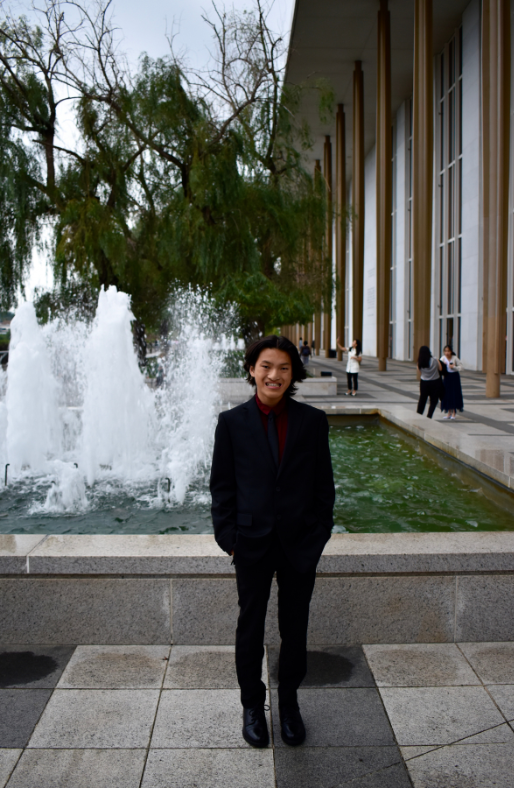
My name is Caleb Fanning, and I am a researcher at North Bay Haven Charter Academy. I am in 11th grade and am currently studying to achieve my AP Capstone Diploma. I am interested in neuroscience and plan to study cognitive/computational neuroscience when I am in college.
The Effects of Music Tempo on Mathematical Performance
Recently, there has been an influx of research on how listening to music of varying tempos and students’ mathematical performance is correlated; however, there has been a lack of research on the variability of BPM within musical genres as it relates to performance. To bridge this gap, this study offers cogent insight into how listening to different tempos within a musical genre can lead to differences in mathematical competence. It was hypothesized that students who listened to slow classical music (Ravel) would achieve higher test scores. To experiment, it was conducted with over 100 high school students anonymously. The experiment required each participant to take a multiplication test while listening to background music, as well as a survey asking for their mathematical knowledge and preference for the music. The raw data were then analyzed, and conclusions were drawn based on each participant’s test scores, mathematical level, and preference for the music. The hypothesis was not supported, with the data displaying that students who listened to Ravel scored the lowest out of the four classical music groups. The experiment’s outcomes offer a myriad of applications. The data showed that students who listened to Stravinsky’s music scored the highest. Furthermore, the data displayed that Shostakovich and Mussorgsky, both considered with a high BPM, had a higher test score than Ravel. These findings provide insight into how specific tempos influence mathematical achievement, offering practical applications for optimizing educational environments. Nevertheless, extensive research beyond this experiment is needed to increase generalizability and eliminate limitations.
Robin Vaughn
North Bay Haven Charter Academy
English
vaughrl@bayhaven.org
{Empty}
{Empty}
neuroscience, mathematics, music
https://drive.google.com/file/d/1jqCiLgJ7Wc-PaExrJJruL4QhX69ZGcP6/view?usp=drive_link
Complete
Asynchronous Online Presentation
2026
5th annual Undergraduate Research Symposium, April 17, 2025
https://pc.fsu.edu/student-research/symposium/research-symposium-program-portal?element_parents=elements/student_photo&ajax_form=1&_wrapper_format=drupal_ajax&token=c4NlIXn-XK74gw29pd4w24vpufPdxUz8PRf1iHjXFu0
{Empty}