
Electrical & Computer Engineering
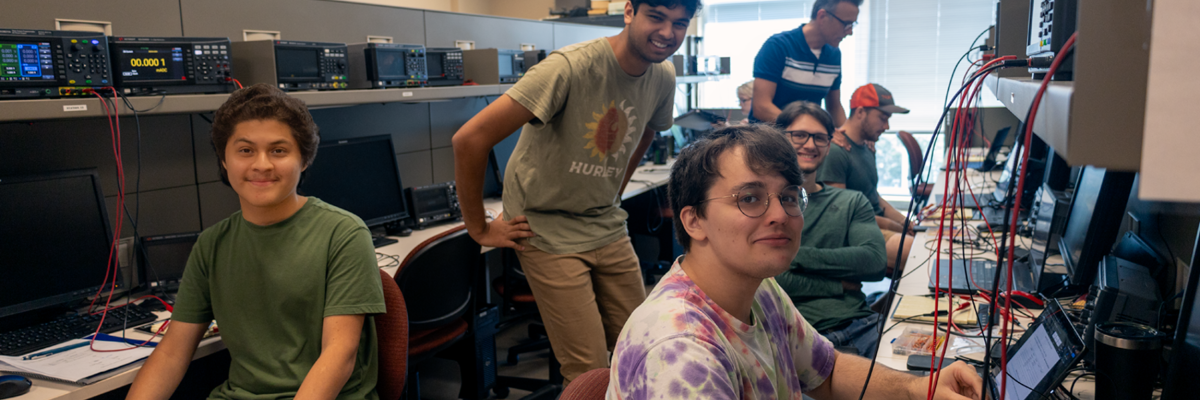
The electrical & computer engineering program at FSU Panama City is part of a leading academic institution with excellent records of achievement in research and public service. It is designed with the student success in mind. With small class sizes, students benefit from a personal teaching environment and individual attention. Both full and part-time schedules are available.
Students can choose from two B.S. degree programs—electrical engineering or computer engineering. Coursework emphasizes all aspects of the profession’s practice, including circuits, analog and digital electronics, cyber security engineering, controls, digital communications, electromagnetic fields and power systems with a Capstone Senior Design project that takes your skills out of the classroom and into practice to solve real-world problems.
Partnering with Keysight Technologies significantly enhances our electrical engineering program at FSU Panama City. Keysight’s state of the art equipment offers our students an exceptional hands-on training experience and gives them a highly competitive edge in the electronics engineering field.
We are also excited to announce a new online graduate certificate program in Cyber Security Engineering.

Electrical & computer engineering is considered as one of the best jobs in the United States based on salary, prestige, growth and security.

The median annual wage for electrical engineers is $111,910, with the top 10 percent earning more than $175,460.

Overall employment of electrical engineers is projected to grow 7% over the decade, driving continuous demand across the workforce.
What can I expect from the Electrical & Computer Engineering Majors?
Our ABET-accredited electrical and computer engineering programs feature small size classes, a unique hands-on experience with individual lab stations for students, and a high employment rate for graduates. In the electrical engineering degree program, students develop a strong skill set in electric circuits analysis, analog and digital electronics, signal processing, communication systems, control systems, electromagnetics, power systems, renewable energy and electric motors.
In the computer engineering degree program, students develop a strong skill set in computer programming, computer networks, embedded systems, machine learning, Artificial Intelligence, and Cyber Security. All electrical and computer engineering students complete a senior design project which is often co-sponsored by the industry and exposes the students to real-world engineering problems.


What degrees or certifications are offered in this program?
- Bachelor of Science in Electrical Engineering
- Bachelor of Science in Computer Engineering
- Master of Science in Electrical Engineering
- Electrical Engineering B.S. to M.S. Pathway
- Graduate Certificate in Cyber Security for Engineers
* Program is eligible for the Strategic Emphasis Waiver, which could save you up to 50% on applicable course fees. Learn more about the program.
The B.S. in Computer Engineering program is accredited by the Engineering Accreditation Commission of ABET, under the commission’s General Criteria and Program Criteria for Computer and Similarly Named Engineering programs. The B.S. in Electrical Engineering program is accredited by the Engineering Accreditation Commission of ABET, under the commission’s General Criteria and Program Criteria for Electrical and Electronics and Similarly Named Engineering programs. For more information on accreditation, visit the College of Engineering's accreditation webpage.
What types of careers could this program prepare me for?
Electrical or Computer Engineers may have careers in telecom engineering or internet of things and may work in electric power and renewable energy companies, semiconductor/component manufacturing firms, electromedical manufacturing firms, electric car manufacturing firms, as well as in the defense industry or in research and development.