
Research Symposium Program - Individual Details
Nathan Cerletty https://drive.google.com/file/d/1Sq-faCsh3WHwu3b4UVUEHWLFV1eLoiCv/view?usp=sharing
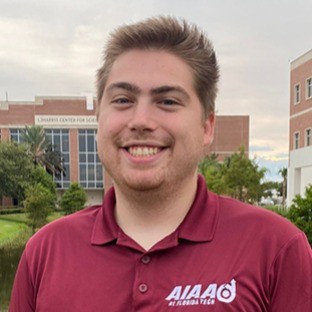
BIO
I am an aerospace engineering professional focused on systems integration, verification and validation along with cross-functional leadership within defense programs. I earned my BS in Aerospace Engineering, Cum Laude, from the Florida Institute of Technology in 2023, with concentrations in astronautics, propulsion, aerodynamics, and orbital mechanics. During my undergraduate studies, I developed a strong interest in space operations and the ground support infrastructure that enables launch and missile systems.
Since August 2023, I have served as a Systems Engineer at Northrop Grumman, where I support the definition, integration, and documentation of special test equipment for high-value aerospace programs. In this role, I have led a three-engineer team developing system architecture and test plans exceeding 20 million dollars, collaborated closely with the Office of the Chief Engineer, and helped align technical execution with evolving customer and contractual requirements while reducing program risk.
In parallel, I am completing a Master of Science in Systems Engineering at Florida State University, expected in May 2026, along with a Graduate Certificate in Systems Engineering Leadership. My prior experience includes internships at Lockheed Martin supporting multiple fixed- and rotary-wing platforms. My career goal is to combine technical rigor and leadership to deliver reliable, mission-critical aerospace systems.
Quiet Authority in Extreme Environments: The Leadership Legacy of Neil Armstrong
Authors: Nathan Cerletty, Dr. GeorgiadisStudent Major: MS Systems Engineering
Mentor: Dr. Georgiadis
Mentor's Department: IME Mentor's College: College of Engineering Co-Presenters:
Abstract
This paper examines the leadership legacy of Neil Armstrong through the lens of contemporary
leadership theory and motivational research. Although widely recognized for commanding the
Apollo Eleven mission, Armstrong’s influence extended far beyond a single historic event. His
leadership was grounded in disciplined judgment, ethical responsibility, and technical mastery
developed through naval aviation, experimental flight testing, and human spaceflight. Using
frameworks related to visionary, learner, team oriented, achiever, optimizer, and key contributor
motivations, this analysis demonstrates how Armstrong consistently aligned internal motivation
with observable behavior. His calm decision-making during Gemini Eight and Apollo Eleven
illustrates ethical climate reinforcement, emotional intelligence, and values-based courage under
pressure. Additionally, his emphasis on collective achievement and openness to technical input
contributed to a culture of trust, accountability, and constructive dialogue. By integrating
motivation theory, ethical leadership research, and systems-based leadership principles, this
paper argues that Armstrong exemplified quiet authority in extreme environments. His leadership
model offers a durable framework for ethical, disciplined, and purpose driven influence in
modern high risk and technically complex organizations.
Keywords: Leadership, Teamwork, Discipline, Moon Landing, Mission Focus