
Research Symposium Program - Individual Details
Stacey Carey, Seth Forehand, and Philip Jung https://pc.fsu.edu/2026-synchronous-online-research-presentations
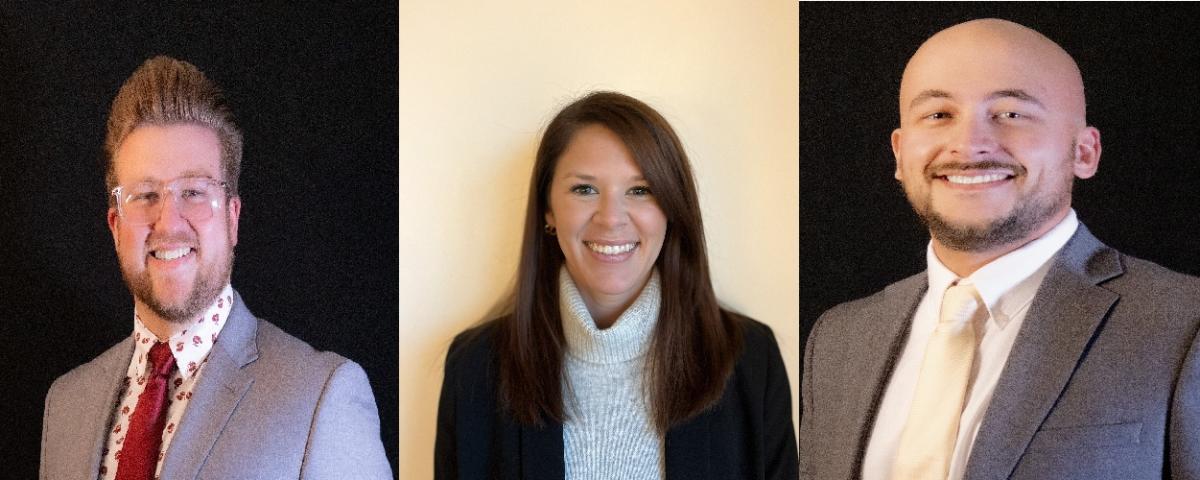
BIO
Stacey-"I have lived in the Pensacola area the majority of my life, so that is where I call home. I enjoy spending time with my husband and our dogs. This project meant a good deal to me because it allowed me to give back to the university that provided me with the education to practice anesthesia."
Seth-"I'm 29 years old, from a small town in the panhandle, and I'm passionate about anesthesia. I am especially passionate about regional and cardiac anesthesia. I'll be working at HCA Fort Walton after graduation. In my free time, I enjoy exercising, golfing, hiking, gaming, and music."
Philip- "I'm from the Gulf Coast and am passionate about nurse anesthesia, patient safety, and clinical excellence. I have particular interest in obstetric anesthesia and continuous improvement in practice. Outside of training, I enjoy hunting, fishing, cooking, woodworking, photography, and spending time with my family."
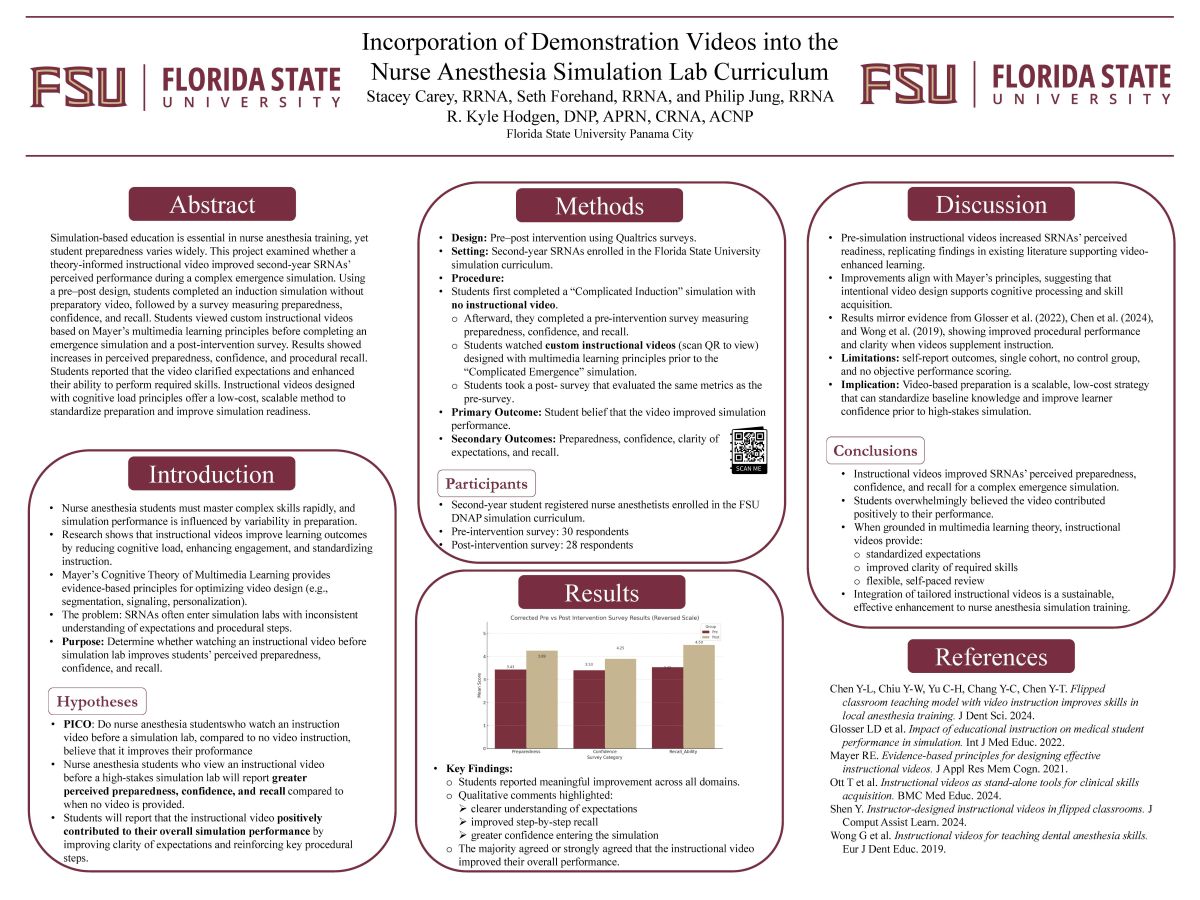
Incorporation of Demonstration Videos into the Nurse Anesthesia Simulation Lab Curriculum
Authors: Stacey Carey, Seth Forehand, and Philip Jung, Dr. R. Kyle HodgenStudent Major: Doctor of Nurse Anesthesia
Mentor: Dr. R. Kyle Hodgen
Mentor's Department: Nurse Anesthesia Mentor's College: Florida State University PC Co-Presenters:
Abstract
Simulation-based education is foundational in nurse anesthesia training, yet variability in student preparation can affect performance during high-stakes assessments. Instructional videos designed with cognitive learning principles offer a way to standardize preparation and improve learner outcomes. This doctoral project asked the question —In nurse anesthesia students undergoing simulation lab training (P), does watching an instructional video beforehand (I), compared to no video preparation (C), lead students to believe that the video improves their simulation performance (O)? To answer this question, we evaluated whether access to a custom-designed instructional video before a simulation lab improved second-year student registered nurse anesthetists’ (SRNAs) perceived preparedness, confidence, and procedural recall during a complex emergence scenario. A pre–post intervention design was used. SRNAs first completed a “Complicated Induction” simulation without preparatory video and then completed a pre-intervention survey assessing confidence and recall. Two weeks later, the same cohort completed a “Complicated Emergence” simulation after viewing a video developed using Mayer’s Cognitive Theory of Multimedia Learning. A post-intervention survey assessed the same metrics and asked about the perceived impact of the video. Students reported improved confidence, clarity, and preparedness after the video-enhanced simulation. Most participants believed the video contributed positively to their performance. These findings are consistent with existing literature demonstrating that multimedia instruction, when designed to manage cognitive load and enhance engagement, improves learning outcomes. Instructional videos that are theory-informed and delivered “just-in-time” represent a scalable, low-cost strategy to enhance simulation preparation in nurse anesthesia education.
Keywords: instructional video, simulation, nurse anesthesia, cognitive load, multimedia learning, student confidence, SRNA education