
Student wellness counselors embrace holistic approach
On the Florida State University Panama City campus, there are many opportunities to learn about the way our brains work. A student could opt for a degree in psychology and delve into the science of neurons and grey matter. A different student could choose to study social work and learn all about the ways a person can be present to help others. Yet another could be an elementary education student and research the inner workings of a fifth grader’s brain to find the answer to that one, unparalleled question… “Are you smarter than a fifth grader?”
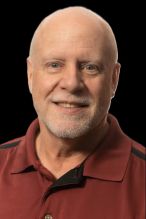
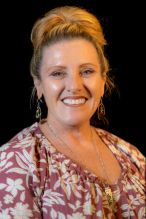
There’s another avenue about which students are less aware. This avenue goes by two names: Michael McLaughlin and Jodi Kellett, the mental health counselors of the FSU PC campus. They were happy to share some insights into their goals as counselors, as well as stories about their personal lives.
McLaughlin, a licensed clinical social worker, has been with FSU for a little more than three years with decades of experience working at other facilities to provide mental health and counseling services. When he’s not counseling, he loves a game of disc golf and bashfully admitted to playing the bass guitar. Kellett added that he also plays the trumpet.
Kellett, also an LCSW, wasn’t so quick to find her place working in social services, first describing her hobbies of hanging out with her poodle, snorkeling and hiking. She recently joined the staff at FSU Panama City after bumping into McLaughlin in a grocery store; he informed her that a counselor position was available. She had formerly served as an adjunct professor.
HOLISTIC TREATMENT
Kellett is leading a new outreach program the two are working to implement. Wellness Outreach draws inspiration from the Wellness Wheel, a diagram that displays at least four central parts that make up the health of an individual. These parts can be broken down further, but the main segments are Physical, Emotional, Spiritual and Mental. Treating each of these to better treat the brain falls under “holistic practice,” in which the goal is to treat every portion of the body and brain so that each part will benefit from the health of the others.
For example, physical exercise can clear the mind. By treating the body, the brain can feel healthier. The opposite is also true, as when a person gets enough sleep at night the brain and body feel rested and ready for the new day.
Or, as Kellett said, “The brain is the epicenter of the human experience.”
Our brains process information, including physical sensations. By highlighting all the different methods towards bettering one’s health, both mentally and physically, Kellett and McLaughlin’s goal is to have a “whole, well campus” with students who know they can be well in every meaning of the word.
McLaughlin equated the mission of a counseling office to freeing up processing space in the brain, which he likened to a computer’s R.A.M. (random access memory) versus its R.O.M. (read only memory). R.A.M. is your computer’s “short term” memory that is needed to run applications and open files. Issues arise when a computer has too much in its R.A.M. storage. When this happens, it can become overloaded, laggy, and contribute to a whole host of problems. The solution is occasionally clearing out R.A.M. storage to make way for new “memories.”
McLaughlin posits that therapy exists to do the same thing. When too much stress overloads your system and makes everything feel “laggy,” the way to clear out that stress is to visit your counselor and just talk it out. By getting all of these stressors off your chest, you can make room for new memories and clear out all the bugs that might have made their way into your systems in the process.
FREE ADVICE
The two counselors offered little nuggets of advice to the faculty, staff, and students. They paused for a moment to mull over the way they wanted to phrase these statements, and Kellett was the first to speak: “It really is cool to get therapy, it shows you care about yourself.”
McLaughlin took a little longer to answer: “The idea is that you only live once, so living the best way you can is how you succeed at life-ing. Life-ing is success, existing is … existing.” He explained that you should live your life to the fullest, instead of simply letting life pass you by.
Kellett added, “Take care of your mind and the rest will follow.”
And the final piece of advice from McLaughlin was, “Therapy should be as easy as breathing.”
To reach out to the FSU PC Counseling Office and receive free mental health counseling, you can reach Michael McLaughlin at mrm18bg@fsu.edu and Jodi Kellett at jlk19h@fsu.edu.