
Contact Information
Monday: 1:00 p.m. - 3:00 p.m.
Wednesday: 1:00 p.m. - 3:00 p.m.
Friday: 1:00 p.m. - 3:00 p.m.
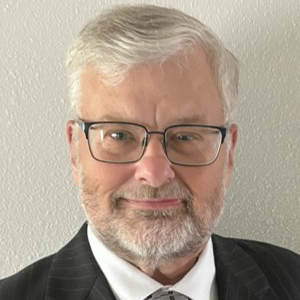
David C. Gross brings expertise in model-based systems and digital engineering, modeling and simulation, system architecture, human-computer interfaces—particularly virtual environments—and process engineering. He has led technical innovations exceeding $1 billion in value and influenced over $3 billion in business opportunities. His distinguished career includes leadership roles at Boeing and Lockheed Martin Aeronautics, where he served as Chief Technologist for M&S and Deputy Chief Engineer for simulation and systems integration labs, respectively. Dr. Gross holds over sixty publications, two patents, and advanced degrees in computer science, operations research, and systems and industrial engineering. His contributions span government, academia, and industry, including service as a NASA Faculty Fellow and his current faculty role at Florida State University.
CURRICULUM VITAE
PROFESSIONAL PROFILE:
• PhD and Technical Fellow of the two largest Aerospace Companies in the world as well as NASA with deep expertise and experience in software and systems engineering for aerospace focused on modeling and simulation
• Creates winning proposals, leads teams, and executes to deliver successful products
• Innovates in every phase of the lifecycle: creates system concepts, develops requirements, explores design solutions, designs, constructs, and demonstrates systems and software engineering products that meet the customer’s needs, and trains users
• Develops discrete event & continuous simulations, desktop applications, and embedded software
• Recognized Academic who communicates clearly and effectively at all levels
• University-level instructor and faculty since 2000
• Faculty appointments at the University of Arizona and Florida State
• Successful course development and deployment in model-based engineering, system architecture and human computer engineering
• Strong record of creativity, ingenuity, and high impact
• Business development skills as demonstrated in winning proposals in excess of $5 billion
• Innovative cost savings in excess of $1 billion
• More than fifty publications on software/systems engineering, virtual reality, modeling, and simulation systems
• Conducted fundamental and applied research leading to new inventions and deployed techniques within the corporation
• Patent Numbers 8138992 and 7557775; with additional disclosures and proprietary non-disclosed inventions
• Dedicated to developing effective teams and successful individuals
• Long track record of meeting earned value goals for cost, schedule, and quality
• Highly analytical while able to bridge technical-nontechnical opportunities
• Highly effective in multi-disciplinary environments and with unprecedented challenges
PERSONAL PROFILE
• Parents: Charles Arthur Gross and Dorothy Loreman Gross; Siblings: Robert and Michael; Children: Kevin, Robyn, Jenny
• Born in Tuscaloosa, AL; raised in Rolla, MO with summer long assignments in Kansas City KS, Los Angeles, CA, Ridgeview, CA (Naval Air Weapons Station China Lake), Chattanooga, TN, and Birmingham, AL; after 5th grade moved to Auburn, AL; after college lived in Decatur, AL with extended temporary duty assignments in Wichita, KS, Seattle, WA and Orlando, FL; mid 2008 moved to Yorktown, VA; late 2009 moved to Marietta, GA
• High School: Interact Service Club, Math Club, Most Intellectual of the Senior Class, National Honor Society, National Merit Finalist
• Music: Trombone, Auburn High School “A” Band, Auburn University Marching Band, Concert Band, Yardbirds, Auburn Knights Jazz Orchestra, and Church Choirs/ensembles
• Scouting:
• Cub Scout: Arrow of Light, won pinewood derby
• Boy Scout: Eagle Scout with Three Palms, Order of the Arrow (brotherhood), many offices
• Adult Scouter: Roles: Cubmaster, Den Leader, Scoutmaster, Committee Chair, Merit Badge Counselor, Venturing Crew Advisor, District Training Chair, Wood Badge Scoutmaster, District Program Chair, Council Board, Council Executive Search Committee Awards: District Award of Merit, Silver Beaver
• Religious practice: Christian, Campus Life Director, Youth Director, member of local churches, Sunday School Teacher, Deacon, often fill-in preacher, chaired many committees, hired staff, led successful $1 million fund raising campaign
EDUCATION:
Doctor of Philosophy in Systems Engineering (2004)
• The University of Central Florida, Industrial Engineering & Management Systems
• Dissertation: Affordances in the Design of Virtual Environments
Master of Science in Operations Research (1992) Simulation
• The University of Alabama in Huntsville, Industrial & Systems Engineering
• Thesis: The Utility of Modern General Purpose Programming Languages for Discrete Event Simulation
Bachelor of Science in Computer Science (1985)
• Auburn University, College of Engineering, Computer Science and Software Engineering
PROFESSIONAL EXPERIENCE:
Teaching Faculty; Systems Engineering Program, Department of Industrial & Manufacturing Engineering, Florida Agricultural and Mechanical University (FAMU)- Florida State University (FSU) College of Engineering
• May 2020 to present
• Courses:
o ESI 5000 Design Considerations for Systems Engineering
o ESI-5510 Fundamentals of Systems Engineering
o ESI-5001 Systems Test and Evaluation
o ESI-5536 Model Based Systems Engineering and Simulation
o EIN-5930 Systems Engineering Principles for Aerospace
o EIN-5930 Human Factors for Systems Engineering
o EIN 5930 Systems Modeling with Discrete Event Simulation
o EIN-5930 System Architecture Concept & Design
• Research Initiatives:
o Model-based Systems Engineering Requirements
o Virtual/Augmented Reality Human Computer Interfaces
o Resource Constrained Validation of Very Large Simulation Projects
o Efficient & Effective Use of Air Drop for Catastrophe Response
o Sensor Fusion via Creation of Virtual Environments
o Human Factors in the Unified Architecture Framework (UAF) for Situational Awareness
• Service
o Faculty advisor for student chapter of the International Council of Systems Engineers (INCOSE)
o Faculty advisor for student chapter of the Society of American Military Engineers (SAME)
o Faculty advisor for Sigma Theta Mu Honor Society
o Member Department Curriculum Committee
o Campus Distance Learning Support Committee
Assistant Professor, Systems and Industrial Engineering Department, the University of Arizona
• August 2016 to May 2020
• Selected as NASA's Marshall Space Flight Center Faculty Fellow, summer 2017
• Research Initiatives:
o Director: University of Arizona Architecture Driven Systems Lab
o Tools: Cameo Systems Modeler, Unity, Java, STK, Matlab/Simulink
Studies Completed:
- Efficacy of Agile as a Lifecycle Model for Research
- Human Performance Enhancement via Augmented/Virtual Reality
- Conceptual Modeling by Automated Generation of Ontology/Object Process Model
- Leveraging Space Situational Reference Model for Space Situational Awareness
- Increment 1 and 2 Systems Engineering for Dr. Andrew J. Fuglevand, College of Medicine,
- University of Arizona, research project entitled Machine-Learning Based Control of
- Functional Electrical Stimulation for the National Institutes of Health R01 NS102259
- Increment 1 Systems Engineering for Dr. Eric Pearce, Professor, Steward Observatory,
- University of Arizona, research project titled B - UKIRT Debris Observations Pilot Project,
- for the United States Naval Observatory N0018919QZ164
- Winning Response to AFRL ‘s VQ Challenge for Innovative Visualization Tools
- Leveraging the Emerging CubeSat Reference Model for Space Situational Awareness
- Stress in Augmented Reality Human Computer Interfaces
o Co-Principal Investigator: Space Situational Awareness Arizona
Lead systems engineer
Prototyping & evaluating systems architectures
o Proposals
- Evidence-Based Shaping of Enhanced Learning Approach for N00421-19-S-0001, Naval Air Systems Command, $725,332
- Evaluation of a Theoretical Approach Relating Fidelity to Mission/Training Objectives in Virtual/Mixed Reality Systems for N00173-19-S-BA01, Naval Research Laboratories, $701,404
• Teaching:
o Proposed, developed, & delivered SIE-4/558 Model-based Systems Engineering & SIE-658 Advanced Model-based Systems Engineering
o Redeveloped SIE-654 Advanced Concepts in Systems Engineering: successful students gain NCOSE certification
o Redeveloped SIE-410A Human Factors & Ergonomics in Design: coursework adopted at 50+ universities world wide
o Advising four PhD & five Master’s students
o Graduated eight Master’s students with two theses
• Service:
o Chair of the Certified Modeling & Simulation Professional program review committee for the National Training & Simulation Association (NTSA)
o Created first ergonomics lab at the University of Arizona by seeking & received grant for ergonomics lab equipment from Raytheon
o CATIA No Magic Academic Advisory Board
o Winter Simulation Conference 2021 Publicity Chair & Program Committee
o Certified Modeling & Simulation Professional Executive Committee & Program Review
o Created and advised student committee successfully seeking Alpha Phi Mu Honor Society chapter
o SIE Awards Committee, Graduate Admissions Committee
o Peer Reviewer INCOSE International Symposium, INCOSE Western Regional, The Journal of Defense Modeling & Simulation
Lockheed Martin Aeronautics, October 2009 to 2015
Simulation & Systems Integration Laboratories
• Deputy Chief Engineer/Technical Fellow
• At the behest of company leadership, accepted a special assignment to assist the over $1 billion F-35 Verification Simulation (VSIM) project, which was at risk of termination because of its failure to plan and conduct appropriate Verification and Validation (V&V)
• Wrote the first customer accepted V&V plans and reports (after 8 years of failed attempts by others)
• Led, staffed, and trained a competent team
• Developed new procedures to focus V&V effort on highest risk areas
• Wrote first V&V reports and guided/reviewed all first generation V&V reports
• Impact: led to the first accreditation of that simulator by the government as an approved venue to close program requirements, and continuation of the project
• Lab utilization studies
• Recommended consolidation and modification of F-35 labs
• Primary contributor to Lockheed Martin Aeronautics strategic plan for man-in-the-loop labs while shaping investment in these extraordinary capabilities for the next 20 years
• Impact: a documented cost savings in excess of $200 million
• Ensured technical integrity of the F-22 laboratories, guiding planning and resolving deep modeling challenges created by changes in those weapon system’s design
• F-22 Air Warfare Center recognized as a national asset by the Department of Defense (DoD)
• Provided vision & direction for all lab processes and related training
• Developed and deployed a complete training taxonomy for all of the 800+ engineers in the Simulation and System Integration Labs leveraging commercial, academia, and Lockheed sources
• Developed and taught the first eight Lockheed internal courses to more than 500 engineers
• Achieved International Organization for Standardization (ISO) 9001 certification and Capability Maturity Model Integrated (CMMI) Developer Level 3
• Impact: re-engineered all of the M&S processes and procedures leading to dramatically increased productivity (e.g., software development exceeding 50 source lines of code per hour) and reduced cost/schedule by orders of magnitude; reduced projected cost of training by an order of magnitude
• World Class Modeling & Simulation (M&S) internal research initiative
• Provided vision & direction for leading to the successful development, deployment, and use of new simulation experiment venues and valuable reusable and adaptable simulation software
• Impact: Products have been leveraged for the F-35 and current Lockheed concept development programs and a documented cost savings thus far of $100 million on the investment of $50M
• Integrated battlespace simulation
• Requested by director to assist in recovering the behind schedule, over cost project
• Developed new architecture and project plan
• Impact: project back on track and, as a result, promoted to chief engineer of project
• Input on three separate corporate strategic planning and technology focus groups incorporated into the final corporate strategy documents
• Drove advancements in industry wide M&S Body of Knowledge and M&S Professional Certification programs
• Taught Certified M&S Professional (CMSP) Preparation Tutorial at the Interservice/Industry Training Systems and Education Conference, 2008-14, Simulation Interoperability Workshop, 2011-2012, Summer Simulation Multi-Conference, 2008-9, and other venues
• Edited numerous papers for the board of editors for “Simulation: Transactions of the Society for Modeling and Simulation International” and the “Journal of Defense Modeling and Simulation”
• Contributed key elements of the M&S body of knowledge while serving on the SimSummit team
• Shaped the final taxonomy of the CMSP exam’s areas of knowledge and validated exam questions
• Impact: reached more than 300 students and assisted more than 50 to achieve the certification
• Informally consulted with numerous Lockheed Martin projects outside of Aeronautics and the government customer community
• Led interdisciplinary teams from five to 50 people, including staffing decisions
• Successfully met earned value goals for cost, schedule, and quality
• Mentored engineers resulting in their advancement to the technical fellowship and direct promotion University of Alabama at Huntsville, 2002 to present
• Taught M&S Fundamentals, Simulation Development, and Model-based Systems Engineering
• Successfully deployed via in-person and distance learning modes
• Developed M&S Certificate Program structure, course content and member of the Advisory Board
• Impact: more than 500 students have completed these courses, from government, commercial, and academia, nationwide and internationally, with outstanding ratings from students
Georgia Tech (2012-2014)
• Guest lecturer in systems engineering addressing the impact of M&S on systems development Southern Polytechnic State University, 2010 to 2015
• Adjunct Professor, in-person, online, and hybrid modes, for graduate and undergraduate courses in systems engineering and computer science including engineering economics, software metrics and quality management, modeling & simulation, system architecture, project management, systems analysis and design, contemporary technological systems: design, analysis and architecture, and the graduate system engineering project
• Defined four courses for the System Engineering Department’s achievement of accreditation from the Accreditation Board for Engineering and Technology (ABET)
• Reviewed and approved capstone undergraduate and graduate projects
• Counseled Software Engineering Department by serving on their Industry Advisory Board
• Impact: department achieved first ABET accreditation, more than 300 students taught, led revision of Software Engineering Department curriculum
The Boeing Company: Chief Technologist for Experimentation/Associate Technical Fellow (2008-2009)
• Guided technical planning for experimentation capabilities across Integrated Defense Systems (IDS)
• Formulated research projects; determined requirements for simulation laboratories; shaped the development of plans for experimentation campaigns; defined experimentation processes, established standard tool suite, created collaboration between experimentation and both M&S technology contributors and M&S application users
• Opened new company site in Suffolk, VA as lead technical person
• Formulated simulation-based experiments for advanced product development in partnership with
customers, suppliers, and other vendors
• Guided development and deployment of simulation technologies including virtual reality leading to invention disclosures on a Method for Discovering Semantic Interoperability, and A Means for Expressing and Testing Simulation Conceptual Models
• Advised and funded M&S course development at Old Dominion University and UA Huntsville
• Selected as alpha tester/reviser for key Boeing strategic technologies such as Boeing Certified Software Architect program, Boeing Network Centric Operations training, and key invention evaluation teams
• Led interdisciplinary teams from five to 200 people, including staffing decisions
• Successfully met earned value goals for cost, schedule, and quality
The Boeing Company: Chief M&S Technologist Associate Technical Fellow (1993-2008)
• At the behest of Ground-Based Midcourse Defense (GMD) management, accepted a special assignment to restructure GMD M&S V&V for the 100 simulations in the tier 1 baseline and the 300 models and simulations in the tier 2 baseline
• Wrote the first customer accepted M&S V&V plan for the GMD program (after five years of failure by others), defining the technical requirements (procedures, tools, and products) for all tier 1 and tier 2 GMD M&S V&V models and simulations
• Led, staffed, and trained a competent team
• Wrote the first five product specific M&S V&V plans for the GMD program and reviewed all others
• Wrote the first V&V report, which was accepted by the customer, and reviewed all others
• Impact: GMD began to deliver V&V products acceptable to the customer on-time, and cut the cost of the V&V effort significantly
• Conceived, proposed, won, and led research program to develop a method for analyzing the capability of systems via genetic algorithms leading to patent disclosures
• Program Chair: Foundations 04 Simulation Verification, Validation, and Accreditation Workshop
• Human Computer Interfaces Research
• Proposed, wrote, won, and executed two year Cooperative Research and Development Agreement (CRADA) with Boeing, the Naval Airfare Center Training Systems Division, and the University of Central Florida regarding human computer interfaces in virtual environments
• Addresses the significant technical problem regarding how to design a virtual environment where users would know what they can and should “do” by extending Gibson’s theory of affordances to address perception in virtual environments
• Developed techniques to make the theory operational, created experiments to test the theory, & demonstrated that virtual environments built according to these techniques required less learning or adaptation by their users
• Named as the University of Central Florida’s representative for the first Institute of Industrial Engineering (IIE) Doctoral Colloquium in recognition of this outstanding research finding
• Impact: Received two patents related to Method and Apparatus for Evoking Perceptions of Affordances in Virtual Environments with seventeen associated process claims
• Primary technical author of all IDS System Engineering M&S processes
• Created and deployed seventeen process assets which are IDS standards addressing procedures and products for simulation requirements, design, implementation, verification, validation, and accreditation, and technology insertion
• All are lightweight (low overhead) CMMI level 3 compliant processes
• Impact: provided a strong basis for integrating Boeing customers and programs on a common foundation which has been used on more than 10 proposals and programs
• Training and Mentoring
• Developed and taught modeling and simulation training for all Boeing IDS
• Developed the bulk of the content for the web-based System M&S Overview which was required training for more than 20,000 Boeing technical employees
• Developed and taught education and training courses on software development metrics, quantitative management, and trade studies
• Applied Lean principles to structure the training program resulting in $1.5M cost avoidance for this single skill code and the Boeing System Engineering Training Initiative lead recommended all skills (not just M&S) adopt this approach
• Alpha reviewer for Boeing’s Software Architect Certification project
• Selected for the inaugural M&S Certified Profession class Professionals (similar to the professional engineer registration)
• Wrote the management plan adopted by the M&S Professional Certification Commission and served on that commission’s board and examination definition and steering committees; taught CMSP preparation tutorials
• Mentored engineers who were advanced to the technical fellowship and were promoted
• Proposed, wrote, won, and executed five contracted research and development contracts for the Defense Modeling and Simulation Office (DMSO) to develop processes and guidance for simulation verification, validation, and accreditation
• Proposed, wrote, won, and executed two Contracted Research and Development (CRAD) proposals from Joint Synthetic Battlespace.
• Developed domain and application engineering processes for the Defense Advanced Research Projects Agency (DARPA) Software Technology for Adaptable, Reliable Systems (STARS) project
• Program Consultation
• Secure Border Initiative Network (SBINet)
• Revised Boeing standard M&S processes, procedures, and templates for SBINet
• Transformational Communications – Space Segment (TCM-SS)
• At the invitation of Boeing Satellite Systems International (BSSI), Inc., served on the proposal red team (who critiques the initial complete draft prior to the final proposal submitted)
• As a result of the red team’s input, BSSI asked for a re-write of the M&S section of the proposal
• As a result of the M&S re-write, BSSI asked for contributions in other sections and to serve on the Gold Team (which approved the final proposal for submission) for the Executive Summary, Mission Capability, Cost, & Integrated Master Production volumes
• Impact: the $5 billion proposal won and a documented technology transfer of $47.2M
• National Missile Defense simulation programs
• Conducted performance audits leading to adopted recommendations for various for example: IDS National Missile Defense program’s Test, Training, & Evaluation Capability (TTEC)
• Reviewed at behest of program leadership because the original projected cost exceeded the program’s budget and the technical requirements exceeded the program’s abilities
• Within 90 days, proposed a revised approach which eliminated requirements for test lines and substantial equipment while still providing required technical analyses
• The key technical concept was dual use: using development test equipment to simultaneously deliver training capability
• Impact: a documented $500 million cost avoidance while giving the customer all of the capabilities desired
• Industry Standardization for Simulation
• At the request of the development group, primary evaluator of IEEE 1516.4 standard for VV&A of M&S Federations
• Led the SISO Simulation Fidelity Implementation Study Groups for involving more than 150 simulation professionals leading to refinement of DoDs simulation lexicon
• Crafted Simulation Fidelity Framework, which remains the most significant means to measure, understand, and use fidelity in the creation of simulation capability
• Elected multiple times to SISO Planning and Review Panels organizing workshops
• A co-author and article contributor to the DoD Verification, Validation, and Accreditation Recommended Practices Guide (forms DoD’s expectations for all of its programs and is also widely used internationally)
• As the request of DoD, drafted revision to DoDI 5000.61 on VV&A which was accepted
• Avenger and Derivatives
• Wrote the software & simulation sections for the winning Surface-Launched AMRAAM (SLAMRAAM) proposal, resulting in documented tech transfer value of $2.9M
• Wrote the software & simulation sections of the winning Avenger Slew to Clue proposal
• Created Vehicle Stability Analysis Program (VSAP) which provided desktop capability for evaluating static and dynamic impact on side to side and front to back vehicle stability at the desktop for any High-Mobility Multipurpose Wheeled Vehicle (HMMWV)
• Software Technology for Adaptable, Reliable Systems (STARS) Project
• Performed domain engineering for Air Vehicle Training Systems Domain
• Defined organizational and technical processes, wrote management plans
• Constructed prototype simulators including X-based graphical user interfaces
• Developed system validation tools and validated simulations
• Trained and led simulator systems professionals on joint government contractor team
• Formally consulted by additional programs in Boeing Commercial Airplanes, Boeing Research and Technology, and IDS such as Future Combat Systems, Flight Trainers, Non-Line of Sight Air Defense, International Space Station, Advanced Tactical Fighter, RAH-66 and others
• Informally consulted with numerous Boeing projects and within the government customer community
The Boeing Company: Advanced Projects Senior Specialist Engineer (Classified Programs) (1989-1993) System Simulation:
• Designed and developed high fidelity engagement simulations
• Researched software engineering techniques, such as object oriented approaches
• Prepared solicited, unsolicited proposals, and position papers
• Analyzed battle scenarios with deterministic and stochastic simulations
• Researched computer-based computation approaches to reverse engineering
• Reverse engineered foreign military equipment’s software & hardware
• Gathered and analyzed system performance data with computer instrumentation
• Completed system analysis that drove system hardware requirements System Replicators:
• Continued development of software engineering methodology
• Constructed system control and user interface software
• Negotiated tailoring of military standards such as DOD-STD-2167A
• Defined and documented system and software requirements
• Created modular approach with swappable hardware/software components
The Boeing Company: Simulation & Training Systems (1985-1989)
• Advanced Distributed Simulator Program:
• Modified Modular Simulator approach for low cost solutions
• Completed preliminary design on weapons, threats, and environment domain
• Defined software engineering environment for program
• Worked on continuous quality improvement team for software development
• Modular Simulation System Program:
• Created computer-aided software engineering tool for Ada types
• Built automated test tool for distributed environment
• Performed trade study of design alternatives
• Simulation and Training Systems B-1B Weapon System Trainer
• Integrated Flight and Aft Station hardware and software
• Led and performed final design, integration, and test of radar simulation
• Modeled threat and environment simulations
• Modeled aircraft systems simulation
• Modeled response of integrated avionics
• Space Station Freedom: developed embedded computer executive
Auburn University Computer Science and Software Engineering Department, September 1984 to March 1985; Pascal Lab Instructor and Simulation Programmer
Alabama Electric Cooperative, summers of 1983 and 1984; Systems and Database Programmer
McDonalds Restaurant, Auburn, AL. Shift Supervisor, 1977-1983
PROFESSIONAL SKILLS:
• Research Topics: process engineering, reusable and adaptable software, semantic interoperability, human computer interaction in general especially virtual environments, advanced modeling techniques, conceptual modeling, information visualization, the use of simulation for design space exploration, and system verification, validation, and accreditation/certification
• Products: system concepts, proposals, project plans, cost and schedules, architectures, requirements, trade studies, statements of work, requests for bids, designs, code, integration, test, verification, validation, and customer acceptance plans and reports for products ranging from simple desktop applications, to web services, to highly complex real time simulation, to embedded avionics
• Software: personally developed and delivered more than 200,000 source lines of code (SLOC) created autogenerators creating in excess of 2,000,000 SLOC, led teams delivering in excess of 4,000,000 SLOC (with additional auto-generated code)
• Modeling techniques: difference/differential equations, regression analysis, statistical modeling, linear/nonlinear/mixed integer programming, network flow, chaos theory, neural networks, and genetic algorithms
• Methods: Operational Concepts, Functional Analysis, Unified Modeling Language (UML), System Modeling Language (SYSML), Object Oriented Analysis and Design, Design of Experiments, etc.
• Systems/Software Engineering Tools: Microsoft Office, Microsoft Project (and other scheduling tools), DOORS, Rational Rose (and other Computer Aided Software Engineering tools), ClearCase (and other configuration management tools), MATLAB, Simulink, Magic Draw (SYSML, UML), etc.
• Programming Languages: C++, Java, Ada, Visual Basic, Scripting Languages, FORTRAN, C, etc.
• Operating Systems: UNIX, Windows, VxWorks, MPX, VMS, etc.
• Computers: IBM & Apple Personal Computers, Sun & Silicon Graphics Workstations, VME-based, Gould 32 series, Vax, etc.
• Clearance: Top Secret/SCI, Inactive
• Organizations: IEEE, IEEE Computer Society, Society for Computer Simulation, International Council on Systems Engineering (INCOSE), M&S Professional Certification Commission
SELECTED RECOGNITIONS:
• Lockheed Martin Fellow; Lockheed waived employment duration requirement to be placed immediately in the fellowship - first and only time this has been done
• Certified Software Engineering Institute Software Architect
• Boeing Associate Technical Fellow
• IEEE Huntsville Section Engineering Educator of the Year, 2009
• Certified ScrumMaster
• Certified Boeing Software Architect
• Certified Boeing Capture Team Leader
• Top rated instructor on Boeing-Huntsville campus for three out of three years
• University of Central Florida’s representative for the 1st Institute of Industrial Engineering Doctoral Colloquium
• Received 5 conference best paper awards in simulation systems engineering
• Received 5 sets of Boeing stock options in recognition of technical merit
• Received 24 Pride at Boeing/Quality Pride Awards
• Selected by the DoD to be key technical contributor, prime author for "DoD M&S V&V Recommended Practices Guide” and DoDI 500061 revision, and program chair for Foundations 2004 Conference
• Named one of top 10 international researchers in Virtual Reality by the Korean Institute of Advanced Science and Technology (the “MIT of Asia”, a key school for international business)
• Selected for the inaugural class of M&S Certified Professionals (CMSP), similar to the professional engineer registration), examination definition, and steering committees
• American Representative to the NATO National Industry Advisory Group on Simulation Validation
• Consulted by the DoD Defense Science Board on Simulation Based Acquisition
• Selected for Huntsville's High Potential Employee Program
• Selected as Lead Engineer on every project worked at Boeing and Lockheed
• Tau Beta Pi -- Engineering Honor Society; Alpha Pi Mu -- Graduate Honor Society
• Dean's List -- Graduate and Undergraduate
PUBLICATIONS:
Manuscripts submitted or nearing the end of preparation
- Gross, D. C. & Elbishari, Y.M. (2021). Preliminary. Experiments Exposing Safety Issues for Consumer Augmented Reality. Submitted to the International Journal of Human-Computer Studies for publication.
- Gross, D. C. & McCommon, A.T. (2020). Research and Education Value in Agile Academic Labs. Manuscript submitted to Journal of Engineering Education for publication.
- Gross, D.C. and Macala, R. (2021). Model-based Systems Engineering: Advancing Requirements and Systems Models. Manuscript in preparation.
- Gross, D. C. Expanding the Scientific Basis of System Engineering. Manuscript in preparation.
- Gross, D. C. & Mohamed, S. J. A System Thinking Consideration of the Reliability of a Concentrated Photovoltaic System in Development. Manuscript in preparation.
- Gross, D. C. An Approach for Allocating Validation Resources on Very Large Simulation Projects. Manuscript in preparation.
Scholarly books, Chapters in Scholarly books, and monographs
- Kirshner, M. & Gross, D. C. (2019). Response to the VQ Challenge for Space Situational Awareness User Interface. AFRL/Innovations, January 14, 2019.
- Gross, D. C. (2017). Opportunities for Improving the Delivery & Utility of the Advanced Concepts Office’s Products, Marshall Space Flight Center Faculty Fellowship Program NASA/TM—2017.
- Gross, D.C. (2014). Technology management and user acceptance of VE technology, 2nd edition. In K.M. Stanney (E.), Handbook of Virtual Environments: Design Implementation and Application (chapter 20). Boca Raton, FL: CRC Press.
- Zeigler, B. P., & Gross, D. C. (2005). Special Issue: Foundations and Model Quality Assessment. The Journal of Defense Modeling and Simulation, 2(4), 177–177. https://doi.org/10.1177/154851290500200401
- Gross, D. C. (2004). Dissertation: Affordances in the Design of Virtual Environments. Orlando, FL: The University of Central Florida.
- Harmon, S.Y., Gross, D.C. (2003). Report on the Workshop on the Scientific Exploration of Simulation Phenomena, Defense Modeling and Simulation Office, Alexandria, VA, 2003.
- Gross, D.C. (2002). Technology management and user acceptance of VE technology. In K.M. Stanney (E.), Handbook of Virtual Environments: Design Implementation and Application (chapter 30). Mahwah, NJ: Lawrence-Erlbaum, Associates.
- Gross, D. C. (1992). Thesis: The Utility of Modern General Purpose Programming Languages for Discrete Event Simulation. Huntsville, AL: The University of Alabama at Huntsville.
Refereed journal articles, published or accepted in final form
- Gross, D.C. (October 2005) Special Issue Editor: Foundations 04 and the State of Simulation Verification, Validation, and Accreditation. The Journal of Defense Modeling and Simulation: Applications, Methodology, Technology, Volume 2 Number 4.
- Gross, D. C., Stanney, K. M. and Cohn, J. (August 2005). Evoking Affordances in Virtual Environments via Sensory Stimuli Substitution. Presence: Teleoperators and Virtual Environments, Volume 14, Issue 4, Pages: 482 - 491
- Gross, D.C., Stevenson, D.E., Youngblood, Y. and Zeigler, B. P. (2004). V&V State of the Art: Proceedings of Foundations 2004. A Workshop on Model and Simulation Verification and Validation for the 21st Century, October 13-15, 2002, Tempe, AZ. San Diego, CA: The Society for Modeling and Simulation, 2004.
- Gross, D.C. and Fairchild, B.T. (2002). Toward Simulation on a Scientific Basis. Scientific Exploration of Simulation Phenomena; Simulation and Wargaming Center, Ft. McNair, Washington, DC: National Defense University.
- Gross, D. C., K.M. Stanney. (2001). Toward a Theory of Affordance Based Design of Virtual Environments. Usability Evaluation and Interface Design: Cognitive Engineering, Intelligent Agents, and Virtual Reality, Lawrence Erlbaum Associates, Inc., p. 1056.
- Macala, R.R., Stuckey, L., and Gross, D. C. (1996). Managing Domain-Specific, Product-Line Development. IEEE Software, May 1996, 57-67.
Other peer-reviewed publications
Conference Proceedings
• Kirshner, M. & Gross, D. C. (2019). Human-Computer Interaction for Space Situational Awareness (SSA): Towards the SSA Integrated Sensor Viewer (ISV), International Conference on Human-Computer Interaction, 504-515, Orlando, FL, 2019.
• Pashaei, V. & Gross, D. C. (2019). Toward an Integrated Situational Awareness Measuring Function for Electronic Health Records, International Conference on Human-Computer Interaction, 495-499, Orlando, FL 2019.
• Lutfi, M. & Gross, D. C. (2019). Applying Model Based Systems Engineering to CubeSats Operated Space Situational Awareness, System Small Satellite Conference. Logan, UT, 2019.
• Hohenstein, S., Carlson, A. and Gross, D.C. (2019). Human Factors in the Unified Architecture Framework Applied to Space Situational Awareness, 2019 Annual IEEE International Systems Conference (SysCon).
• Chandra, A., Lutfi, M. & Gross, D. C. (2018). Leveraging the Emerging CubeSat Reference Model for Space Situational Awareness. AMOS Conference Proceedings. P. 12, 201 Wailea, Hawaii, September 12 – 14, 2018.
• Tucker, W.V., and Gross, D.C. (2013). What more do we want in modeling and simulation interoperability and reuse? Proceedings of the 2013 Grand Challenges on Modeling and Simulation Conference, Article No.27.
• Gross, D.C. and Stuckey Jr., L. (2010). Validating Interoperability for LVC Simulation for T&E. M&S Workshop, Orlando, FL: International Test and Evaluation Association.
• Lacy, L.W., Gross, D.C., Oren, T., Waite, B. (2010). A Realistic Roadmap for Developing a Modeling and Simulation Body of Knowledge Index. Spring 2010 Simulation Interoperability Workshop, Orlando, FL.
• Gross, D. C., Bard, R., and Tucker, W. V. (2009). Toward Trustworthy Simulations. SimTecT 2009, Brisbane, Australia.
• Gross, D. C., and Tucker, W.V. (2007). A Foundation for Semantic Interoperability. Fall 2007 Simulation Interoperability Workshop, Orlando, FL.
• Gross, D. C., Tucker, W. V. and Cameron, S. (2007). Whatever Happened to Simulation Based Acquisition? SimTecT 2007, Brisbane, Australia.
• Gross, D. C. and Tucker, W. V. (2007). Toward Semantic Interoperability. SimTecT 2007, Brisbane, Australia.
• Gross, D. C. (2000). Fidelity as an Emerging VV&A Technique. Spring 2000 Simulation Interoperability Workshop. Orlando, FL; selected for the Workshop's Recommended Reading List.
• Gross, D.C. (2003). Developing/Testing New Approaches for Modeling HFE for C4ISR Systems.Department of Defense Human Factors Engineering Technical Advisory Group, May 2003.
• Gross, D.C and Stanney, K.M. (2002) Affordances in the Design of Virtual Environments, IIE Doctoral Colloquium, Orlando, FL: Institute of Industrial Engineers.
• Gross, D.C. Cohn, J., and Tucker, W.V. (2001) Affordance-Based Design of Virtual Environment Training Systems: A Human-Centric Approach, 22th Interservice/Industry Training Systems and Education Conference, Orlando, FL.
• Gross, D. C. (2001). Affordances & the Design of Virtual Environments as a Multi-Modal ‘Real World’ Laboratory for Training. Annual Meeting of the Human Factors/Ergonomics Society; 2001.
• Gross, D. C., Stanney, K. M., and Cohn, J. (2001). Toward a Theory of Affordance Based Design of Virtual Environments. 9th International Conference on Human-Computer Interaction, New Orleans, LA: HCI International.
• Roza, M., Gross, D. C., and Harmon, S. (2000). Report Out of the Fidelity Experimentation Implementation Study Group. Spring 2000 Simulation Interoperability Workshop, Orlando, FL; selected for the Workshop
Recommended Reading List.
• Gross, D. C. (1999). Report from the Fidelity Definition and Metrics Implementation Study Group (FDMISG). Fall 1999 Simulation Interoperability Workshop Papers, 1999. Selected for the Recommended Reading List.
• Harmon, S.Y., D.C. Gross, and SM Youngblood (1999). Why Validation? Summer Computer Simulation Conference, Society for Computer Simulation International; 1998
• Gross, D.C., W. V. Tucker, S.Y. Harmon, and S. M. Youngblood (1998). Fidelity Theory Advances in Distributed Simulation, 1999/7/1, Summer Computer Simulation Conference, pages 15-420, Society for Computer Simulation International; 1998.
• Harmon, S.Y. and D.C. Gross (1998). On Fidelity and Related Concepts: Fidelity Interim Study Group Report, Fall 1998 Simulation Interoperability Workshop. Orlando, FL.
• Gross, D. C., Pace, D., Harmon, S. and Tucker, W.V. (1998) Why Fidelity? Spring 1998 Simulation Interoperability Workshop. Orlando, FL.
• Gross, D.C., and Stuckey, Jr., L.D. (1998). The Heritage of the Air Vehicle Training Systems Domain. 20th Interservice/Industry Training Systems and Education Conference, Orlando, FL.
• Gross, D. C., RH Freeman, and VT William (1998). A case study in fidelity differential measurements, Proceedings of the 1998 Spring Simulation Workshop, Orlando, FL, 1998
• Gross, D. C., Stanney, K. M., and Cohn, J. (1997). Affordances in Virtual Environments. 7th International Conference on Human-Computer Interaction, San Francisco, CA: HCI International.
• Gross, D. C. and Tucker, W. V. (1997). Simulation: Trends & Implications. Plenary Address at the Simulation Multiconference, Atlanta, GA.
• Tucker, W.V., Gross, D.C., and Stuckey, Jr., L.D. (1997) A Top Down Look at Runtime Standards. Spring 1997 Simulation Interoperability Workshop, Orlando, FL.
• Gross, D.C. and R Freeman, (1997). Measuring Fidelity Differentials in HLA Simulations, The 1997 Fall Simulation Interoperability Workshop, Orlando, FL, 1997.
• Gross, D.C. (contributor) (1996). Verification, Validation and Accreditation (VV&A) Recommended Practices Guide, United states Department of Defense.
• Office of the Director, Defense Research and Engineering, Defense Modeling
• Butler, B., Baker, P., Tucker, W.V., and Gross, D.C. (1996) A Proposal for Runtime Standards. Spring 1996 Simulation Interoperability Workshop. Orlando, FL.
• Gross, D.C., Stuckey, Jr., L.D., and Tucker, W.V. (1996) Final Validation of the Megaprogramming Approach for Reuse in Simulation. 18th Interservice/Industry Training Systems and Education Conference, Orlando, FL.
• Stuckey, Jr., L.D., Gross, D.C., Pryor, G.D. (1996). Technical Expectations for a Full Scale Domain Engineering Demonstration Project. 18th Interservice/Industry Training Systems and Education Conference, Orlando, FL.
• Gross, D.C., Seltzer, R. M. and Tucker, W.V. (1995). Selecting an Architecture for Use in Simulators. 17th Interservice/Industry Training Systems and Education Conference, Orlando, FL.
• Gross, D.C., Stuckey, Jr. L.D., Jones, G.W. (1994). An Instance of the Air Vehicle Training Systems Domain: A STARS Demonstration Project. 17th Interservice/Industry Training Systems and Education Conference, Orlando, FL.
• Gross, D. C., Stuckey, L. and Macala, R. R. (1995). Implications of Megaprogramming for the Training Systems Community. 17th Interservice/Industry Training Systems and Education Conference, Orlando, FL.Selected as Best Paper in Management Track.
• Stuckey, Jr., L.D., Gross, D.C., and Rogers, K.O. (1993) Vehicle Stability Analysis Program. Southeastern Simulation Conference, Huntsville, AL.
• Stuckey, Jr., L.D. and Gross, D.C. (1992). Software Team Management In The Face of Declining Budgets. 14th Interservice/Industry Training Systems and Education Conference, Orlando, FL.
• Stuckey, Jr., L.D. and Gross, D.C. (1992). Is Object-Oriented Design Sound Simulator Software Engineering? 14th Interservice/Industry Training Systems and Education Conference, Orlando, FL.
• Rogers, K. and Gross, D. C. (1992). Human Visual Performance Modeling. 14th Interservice/Industry Training Systems and Education Conference, Orlando, FL.
• Gross, D. C. and Stuckey, L. (1991). Ada Types: The Cornerstone of Simulation Models; the 13th Interservice/Industry Training Systems and Education Conference, November 1991.
Course Material
Latest releases of non-proprietary only
• Gross, D.C. (2017). Ergonomics and Human Factors. Tucson, Arizona. Endorsed by the authors of Designing for People: An Introduction to Human Factors Engineering and the following universities:
1. Esa M. Rantanen, Associate Professor, Department Industrial and Systems Engineering Rochester Institute of Technology
2. Russell J. Branaghan, Associate Professor, Human Systems Engineering, Arizona State University
3. Martin Lavallière, Professeur au Département des Sciences de la Santé Université du Québec à Chicoutimi
4. Daniel V. McGehee, Associate Professor Mechanical and Industrial Engineering University of Iowa
5. Awatef O. Ergai, Assistant Professor Systems & Industrial Engineering, Kennesaw State University
6. Matthew S. Cain, Ph.D., Research Psychologist, Tufts Center for Applied Brain and Cognitive Sciences
7. Kevin Bennett, Ph. Professor, Department of Psychology, Wright State University
8. Lewis Chuang, PhD Cognition for Human-Machine Systems, Ludwig-Maximilians-Universität
9. Dan Nathan-Roberts, Ph.D., Assistant Professor, Department of Industrial & Systems Engineering, San José State University
10. Eve Perris , Adjunct Professor, Rowan University
11. Stephen B. Gilbert, Ph.D., Associate Professor, Industrial and Manufacturing Systems Engineering, Iowa State University
12. Gustav Markkula, PhD, Associate Professor, University of Leeds
13. Nathan Ward, Ph.D., Assistant Professor, Department of Psychology, Tufts University
14. Jim Clauson, Professor, College of Extended & International Education, California State University
15. Russell J. Branaghan, Associate Professor, Human Systems Engineering,, Arizona State University
16. Margaret R. Tarampi, Ph.D., Assistant Professor, Department of Psychology, University of Hartford
17. Abigail R. Wooldridge, PhD, Assistant Professor, Department of Industrial & Enterprise Systems Engineering, University of Illinois at Urbana-Champaign
18. Oleksandr Martynenko, PhD, Institute for Modelling and Simulation of Biomechanical Systems, University of Stuttgart
19. Justin Peddicord, adjunct, Colorado Christian University
• Gross, D. C. (2015). System Architecture. Marietta, GA: Southern Polytechnic State University.
• Gross, D. C. (2015). Contemporary Technological Systems: Design. Marietta, GA: Southern Polytechnic State University. Analysis and Architecture.
• Gross, D. C. (2014). Graduate System Engineering Project Marietta, GA: Southern Polytechnic State University.
• Gross, D. C. (2014). Model-based Systems Engineering. Huntsville, AL: University of Alabama Huntsville.
• Gross, D. C. (2014). Modeling & Simulation. Marietta, GA: Southern Polytechnic State University.
• Gross, D. C. (2014). Simulation Development. Huntsville, AL: University of Alabama Huntsville.
• Gross, D. C. (2013). Project Management. Marietta, GA: Southern Polytechnic State University.
• Gross, D. C. (2013). Systems Analysis and Design. Marietta, GA: Southern Polytechnic State University.
• Gross, D. C. (2012). Modeling and Simulation Fundamentals. Huntsville, AL: University of Alabama Huntsville.
• Gross, D. C. (2012). Modeling and Simulation in Systems Development. Atlanta, GA: Georgia Institute of Technology
• Gross, D. C. (2010). Engineering Economics. Marietta, GA: Southern Polytechnic State University.
• Gross, D. C. (2010). Software Metrics and Quality Management. Marietta, GA: Southern Polytechnic State University.